
Last updated November 24, 2026
 Sweep & inspection
 Caps & crowns
 Flue relining
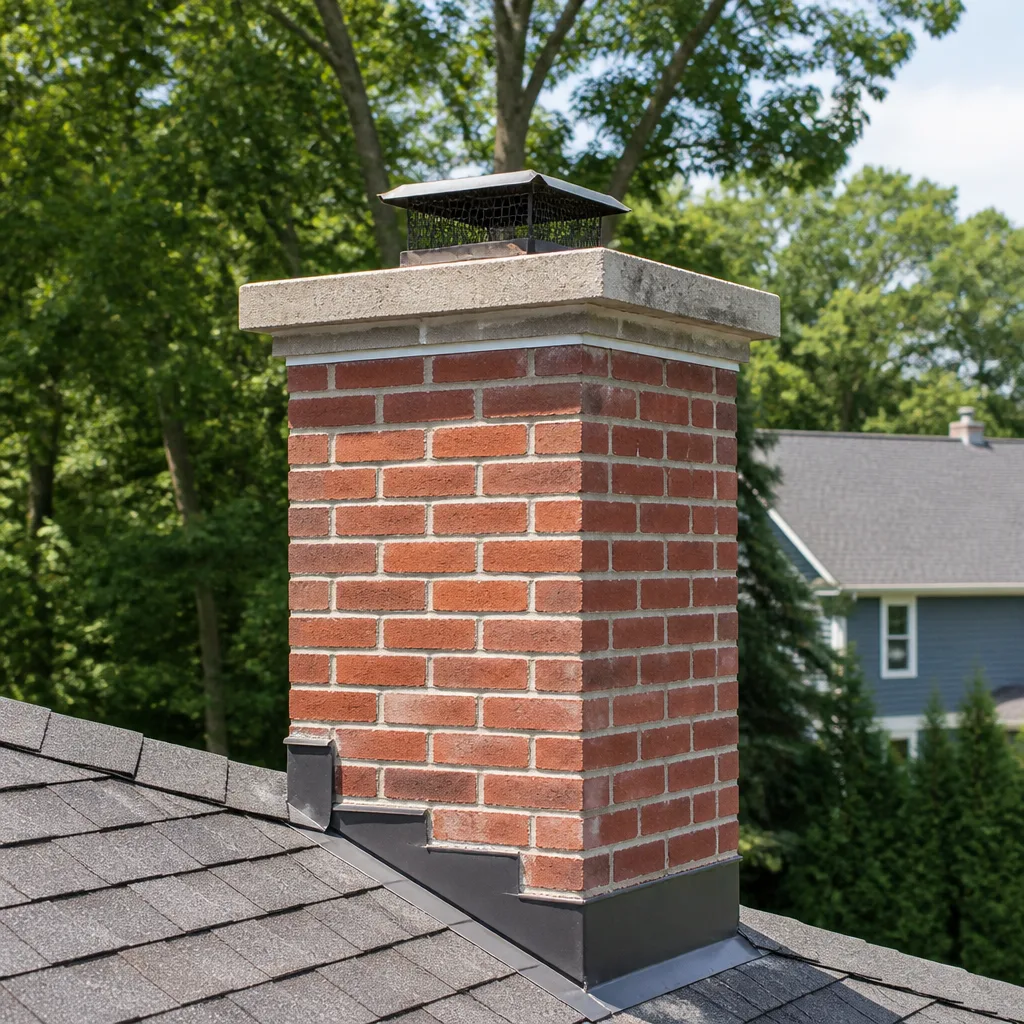 Masonry repair
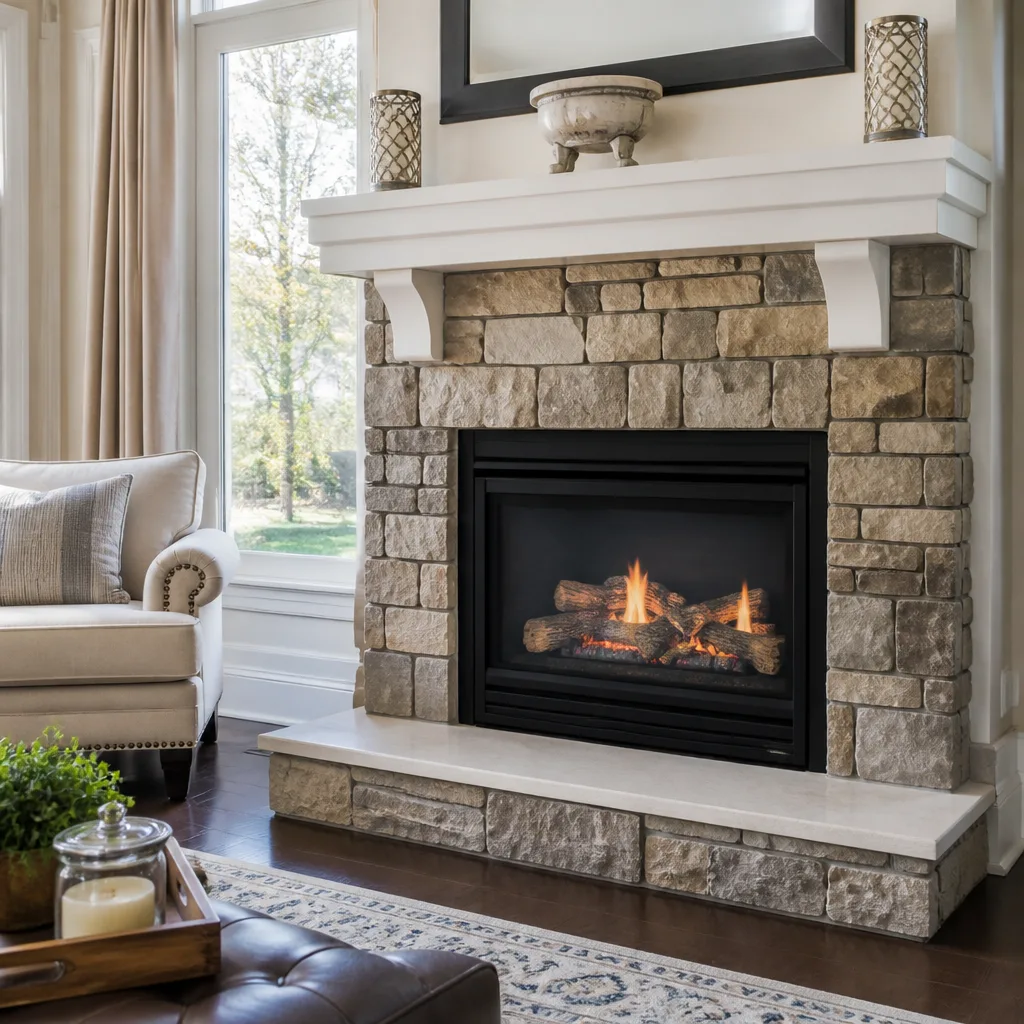 Gas fireplace service
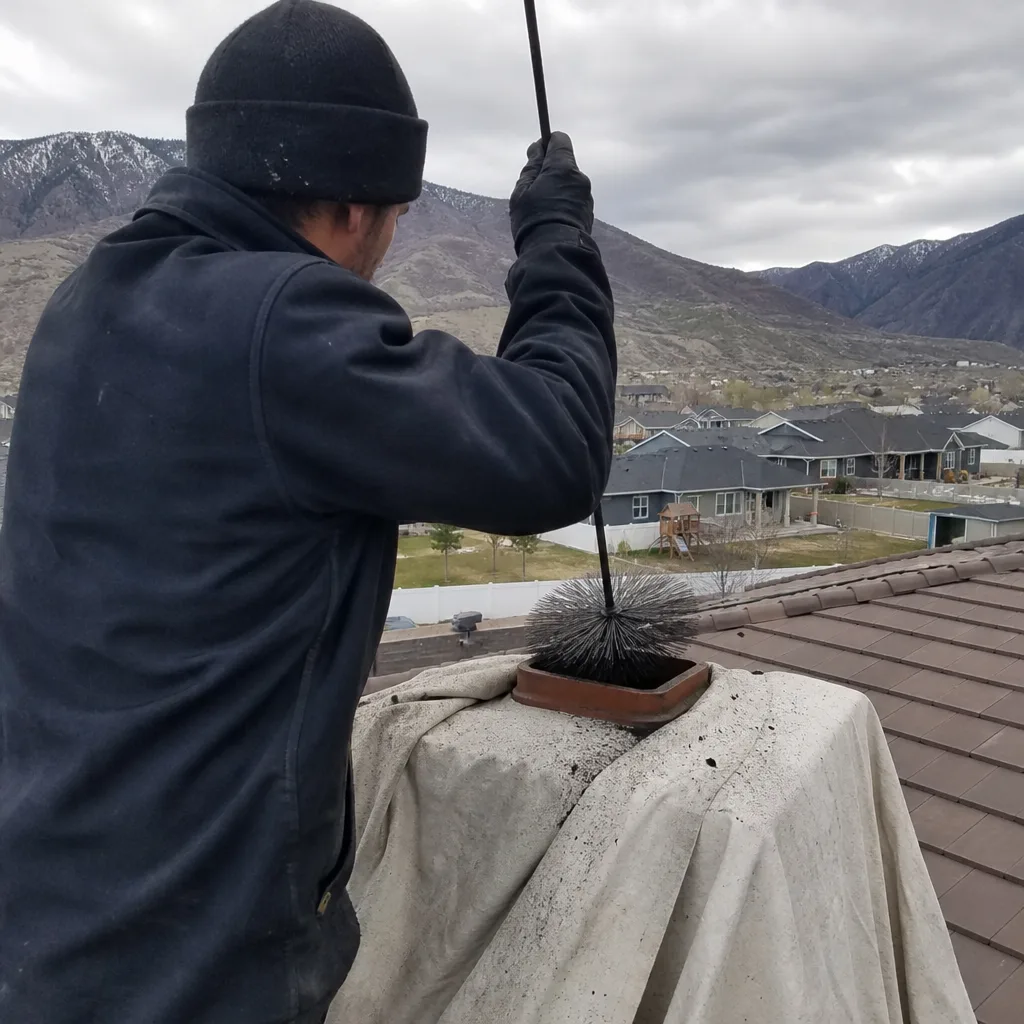
Level 1 sweep and inspection to the NFPA 211 annual standard - flue, crown, cap, and flashing checked and photographed
Chimney sweep logs do not sweep chimneys. They loosen some creosote - which then falls where a brush and vacuum still have to collect it.
Choosing the Right Chimney Cleaning Brand: A Buyer’s Guide for Lehi
Most homeowners assume a chimney cleaning is a chimney cleaning. The brush goes up, the soot comes down, and the brand printed on the bottle of creosote remover never crosses anyone’s mind. Here’s the part that surprises people: the products used during and after a cleaning vary enormously in what they can actually do, and the ones sold at big-box stores are often catalytic powders designed for a single narrow purpose. They make light, flaky stage 1 deposits brittle enough to brush away. They do nothing useful against hardened stage 2 or stage 3 buildup, and some contractors reach for them as a shortcut when they aren’t equipped for a real mechanical clean. This guide walks Lehi homeowners through what professional-grade chimney products are, what they’re capable of, and how to read a contractor’s material choices as a signal of how they work.
Quick Answer
Professional-grade chimney products are purpose-built for specific jobs: DuraFlex for flexible stainless flue relining, HeatShield for firebox and liner restoration, and Famco, Gelco, Olympia Chimney, and Copperfield for caps and crowns engineered to hold up to weather. When a contractor names the systems they install and can explain when each is appropriate, that tells you more about their competence than any advertisement. In Lehi, where freeze-thaw cycles hammer masonry every winter, the brand behind the product matters as much as the labor.
Styles & brands we work with
- Sweep & inspection
- Caps & crowns
- Flue relining
- Masonry repair
- Gas fireplace service
Table of Contents
- Consumer-Grade vs. Professional-Grade Creosote Removal
- Liner Repair and Resurfacing: What HeatShield and DuraFlex Do
- Chimney Cap Brands: Stainless Steel vs. Galvanized
- Crown Coat and Waterproofing in Utah’s Freeze-Thaw Climate
- How to Vet a Contractor by Their Material Choices
- Why a Standalone Inspection Is Worth Asking For
- What “Full-Service” Actually Means From the Firebox to the Crown
Consumer-Grade vs. Professional-Grade Creosote Removal
Creosote forms in three broadly recognized stages, and each requires a different approach. Stage 1 is the sooty, flaky deposit that brushes off easily. Stage 2 is the hardened, glassy glaze that clings to flue walls. Stage 3 is the puffy, concentrated buildup that ignites most readily and signals the highest fire risk. Consumer catalytic powders target stage 1 only. They’re not designed to break down stage 2 or stage 3, and no powder removes glazed creosote from a flue wall on its own.
Professional cleaning relies on mechanical removal first: rotary brushes, poly or wire depending on the flue surface, and in stubborn cases chemical treatments formulated to soften glazed deposits before the brush goes back up. The purpose of a professional-grade creosote remover isn’t to substitute for the brush. It’s to make mechanical removal possible when the buildup has gotten ahead of routine sweeping.
In our experience, the practical question to ask a chimney professional isn’t “do you use creosote remover?” It’s “what do you do when the flue is glazed?” A competent answer will mention mechanical methods, the type of brush, and possibly a softening agent applied before a second pass. An answer that leans on a powder alone is an answer to be cautious about.
Lehi homes that burn wood hard through the colder months tend to build deposits faster than homeowners expect, particularly where the flue is cool and draft is sluggish. That makes the difference between a real mechanical cleaning and a shortcut particularly relevant here.
Liner Repair and Resurfacing: What HeatShield and DuraFlex Do
Two very different professional systems handle two very different liner problems. HeatShield is a firebox and flue liner restoration system. It works by applying a specialized cementitious material that rescores and seals the liner’s interior surface, restoring integrity to masonry chimneys that have cracked, spalled, or developed gaps in the joints. DuraFlex is a flexible stainless steel liner system, installed as a new flue when the existing one can’t be reliably restored or when the chimney needs upgrading to vent a wood insert or a different appliance. Both are professional-specification products, and most general handymen carry neither.
HeatShield isn’t a universal answer. A chimney must meet certain conditions to be a candidate, including sufficient remaining structural integrity, a flue that’s clean and sound enough to accept the material, and a cross-sectional area compatible with the appliance. Disqualifiers include severe spalling, an offset or irregular flue that can’t be resurfaced uniformly, and a chimney that’s simply too damaged for restoration. A qualified contractor evaluates before recommending, and won’t push HeatShield into a chimney where it doesn’t belong.
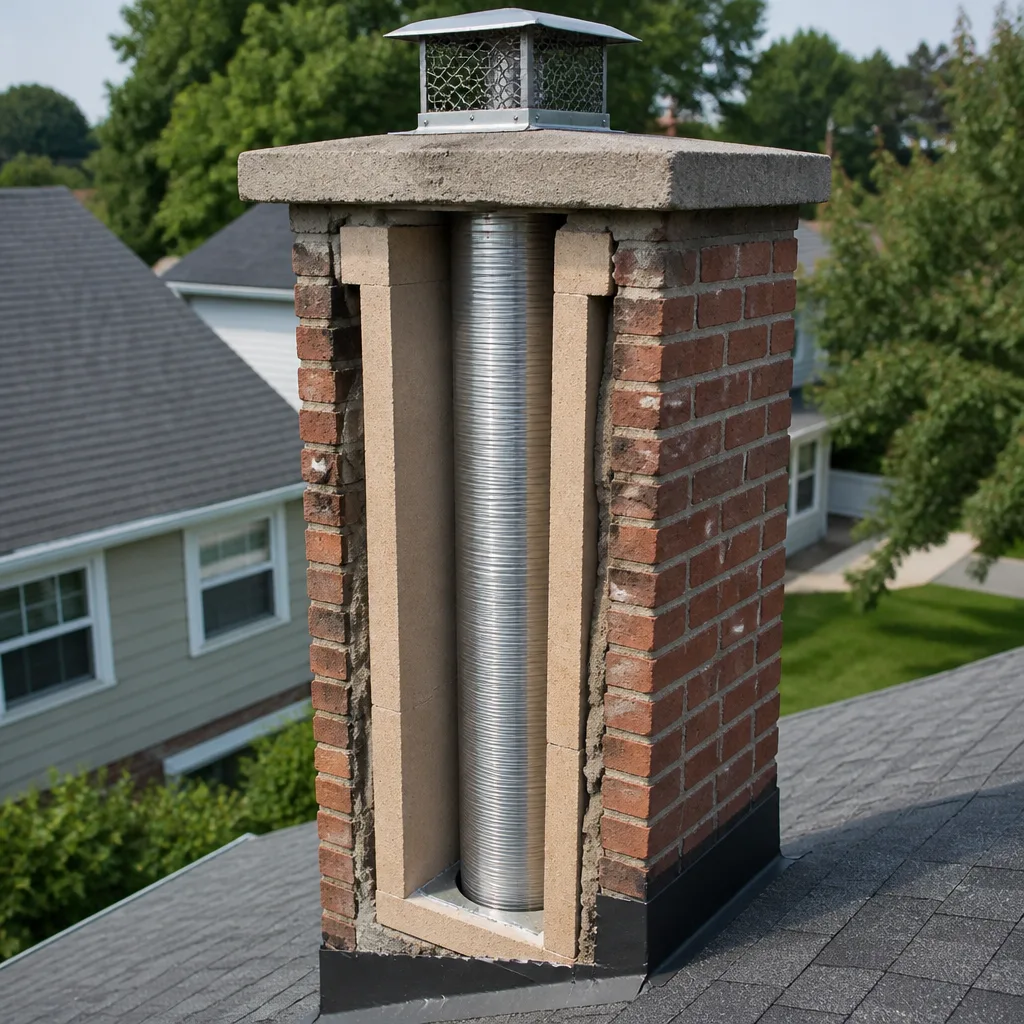
DuraFlex makes sense when restoration won’t get the chimney back to a safe, code-appropriate standard. A stainless liner systems off the flue from the masonry, gives the appliance a properly sized vent, and removes the risk of combustion products working into cracks. In Lehi, where masonry chimneys take the brunt of cold-season thermal cycles, both HeatShield and DuraFlex see plenty of appropriate use.
Ask which system applies to your chimney and why. A clear answer, with a reasonable explanation of what rules the other out, is a good sign.
Chimney Cap Brands: Stainless Steel vs. Galvanized
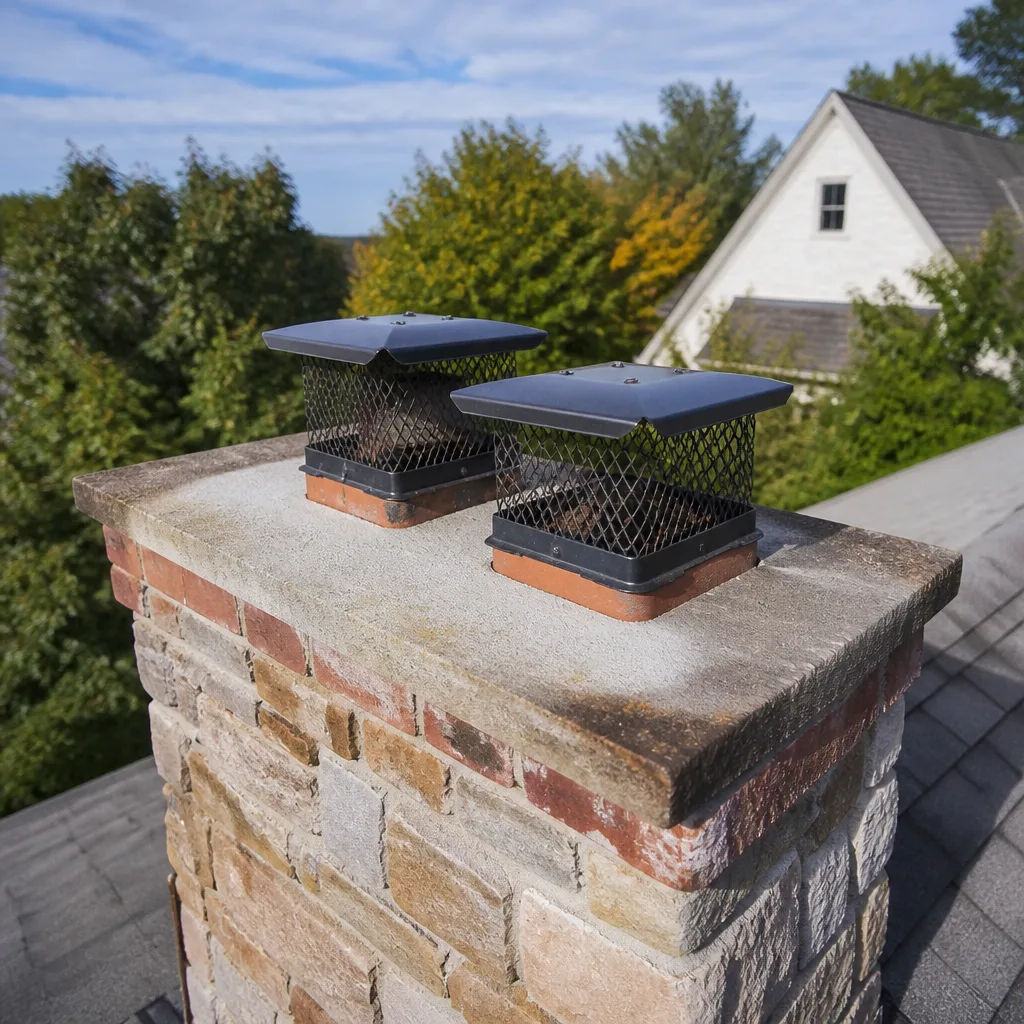
A chimney cap does two jobs: it keeps rain, snow, birds, and debris out of the flue, and it provides the venting and screening that lets combustion gases escape the way they should. The difference between a stainless steel cap with a lifetime warranty and a galvanized cap that corrodes in short order is the difference between a long-term fix and a replacement waiting to happen. Galvanized caps and screens rust from the inside out, and Utah winters accelerate the process. Once the screen fails, the cap becomes a liability: birds nest in the flue, water enters the chimney, and the masonry starts to suffer.
Professional-grade cap brands are built to last. Olympia Chimney and Copperfield caps are made for real weathering, with stainless construction, proper crowns, and screens that don’t rust out. Famco covers similar ground with a focus on weatherproofing components. The purpose matters: these aren’t hardware-store substitutes. They’re matched to the chimney, installed with attention to the flue dimensions and the venting needs of the appliance, and expected to be in place for years.
The installation matters as much as the product. A cap that’s undersized lets rain in. A cap with too-tight screening restricts draft. A cap mounted crooked invites ice damage. When you’re choosing a contractor, ask what brand of cap they install and how they size it. A contractor who names Olympia Chimney or Copperfield and explains the sizing logic is showing you their work.
Crown Coat and Waterproofing in Utah’s Freeze-Thaw Climate
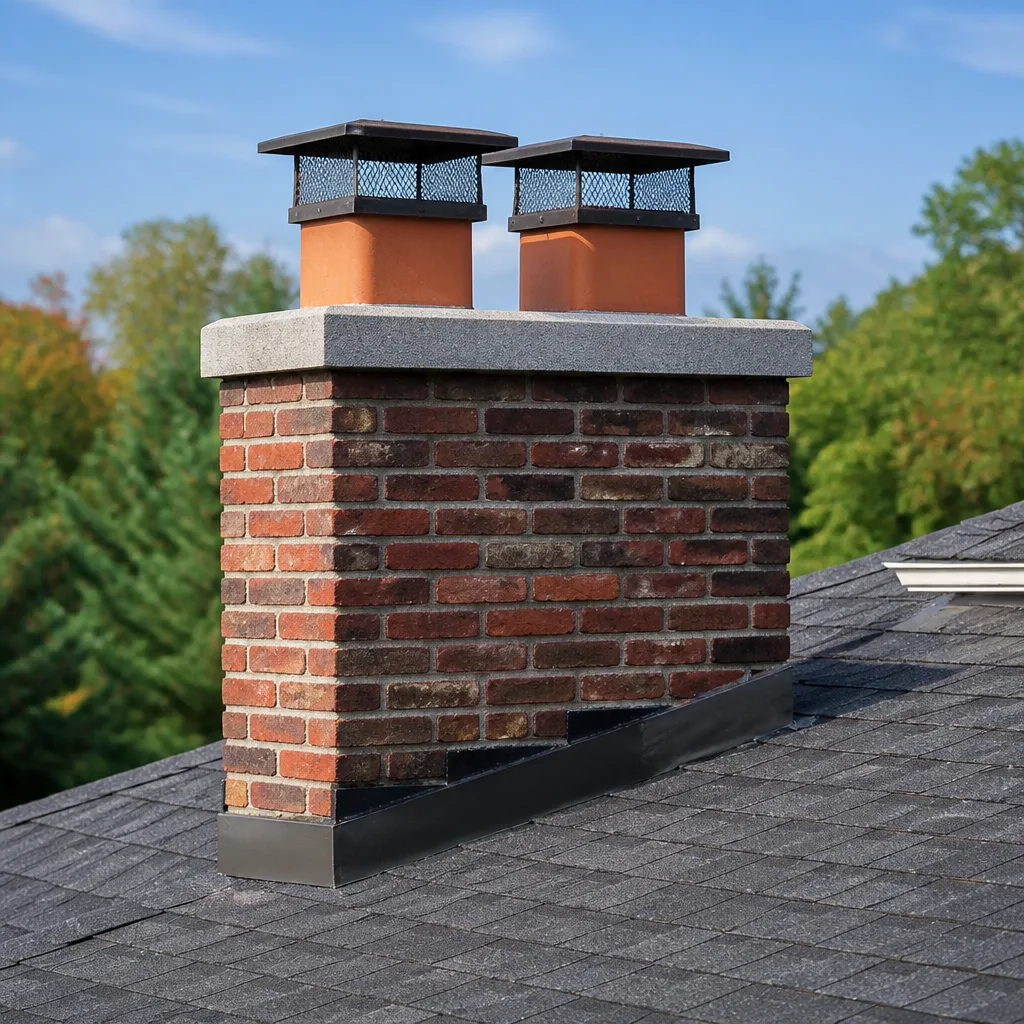
The chimney crown is the concrete slab at the top of the chimney that sheds water away from the flue and the masonry. When it cracks, water gets in, and freezing does the rest. Utah’s freeze-thaw cycles are the most demanding test a chimney crown will ever face: water seeps into a hairline crack during a warm afternoon thaw, freezes overnight, expands, widens the crack, then repeats. A small crown crack becomes a serious masonry problem over a single winter. Crown products are designed for exactly this environment.
Gelco and Famco crown products and sealants are purpose-built for weatherproofing and venting, not improvised from general-purpose caulk or store-bought concrete patch. A proper crown coat is applied to a prepared, sound surface, feathered correctly so water follows the slope away from the flue, and layered thick enough to hold up. Application failures show up as peeling edges, blistering, or new cracks within a season or two. When a crown coat fails early, it’s usually an application problem, not a product problem.
Waterproofing on the masonry below the crown works the same way. The right product bonds to the masonry and lets it breathe. The wrong product, or an improperly applied one, traps moisture inside, and trapped moisture is what actually causes spalling. Ask what product gets used and what the prep involves. A short, confident answer tells you the contractor has done this before.
How to Vet a Contractor by Their Material Choices
The brand question is one of the most useful vetting tools a homeowner has, because it’s hard to fake. A contractor who works with professional-grade products knows them at the level of “what it does” and “when it’s the right call.” One who doesn’t will dodge the question, offer generic language, or name brands they don’t actually stock. Here’s how to read the answers:
- Ask what product they’d install on a cracked firebox. A competent answer names HeatShield or an equivalent restoration system and explains the conditions under which it applies. A vague answer about “sealing it up” is a caution flag.
- Ask what cap brand they’d put on your chimney. Expect Olympia Chimney, Copperfield, or Famco, and expect a sizing conversation. A shrug, or a referral to “whatever the supply house has,” tells you something.
- Ask how they handle glazed creosote. Expect mechanical methods and possibly a chemical softening step. If the only answer is a product name applied as a substitute, ask a follow-up about the brush method.
- Ask what happens if the chimney turns out not to be a HeatShield candidate. A strong answer describes the DuraFlex alternative and how the decision gets made during inspection.
- Ask whether they do standalone inspections. A contractor who offers inspection on its own terms, not only bundled with a cleaning, is more likely to give you an honest report on a chimney that doesn’t need anything.
Answers that signal competence: specific products, specific reasons, and clear disqualifiers for each. Answers that signal indifference: “we use high-quality materials,” “whatever’s on the truck,” and deflection to price.
Why a Standalone Inspection Is Worth Asking For
An inspection that comes attached to a cleaning has a built-in conflict: the cleaning already happened, and the pressure to find something to repair is real. A standalone inspection is your chimney evaluated on its own terms, with nothing riding on the outcome. In Lehi, that’s particularly useful in two situations: preparing to buy or sell a home, and following up on an inspection flag from a home inspector who may or may not have understood what they were looking at.
A professional inspection should include visual review of accessible components and, where the chimney configuration calls for it, camera inspection of the flue interior. You should receive a report that identifies conditions found, their severity, and what if anything needs doing. An inspection that comes back clean is a valid and useful result.
Buyers preparing for a real estate transaction in Lehi often benefit most from an inspection done on its own, before any cleaning, because the report reflects the chimney’s true, lived-in condition. Sellers benefit because the report can head off surprises at the negotiating table.
Ask for a chimney inspection as a standalone service. If a contractor won’t offer it that way, that’s information too.
What “Full-Service” Actually Means From the Firebox to the Crown
Full-service means one contractor handles the whole chimney, from the firebox at the bottom to the crown at the top, without subcontracting. That matters because those components are connected: a firebox in poor repair can push heat into the masonry, a damaged liner can let combustion gases into the structure, and a cracked crown can let water down through the whole stack. When different contractors handle different pieces, the coordination often gets lost.
A documented full-service menu in Lehi looks like the following, and each of these is offered in-house:
- A chimney sweep that includes mechanical removal and, where appropriate, professional-grade creosote treatment.
- Inspection, available standalone or in combination, with report and camera documentation where warranted.
- fireplace repair, including HeatShield restoration of the firebox where it’s a fit.
- chimney repair, including DuraFlex relining when the flue can’t be restored.
- Cap and crown installation using Olympia Chimney, Copperfield, Gelco, or Famco components as appropriate.
Brand partnerships are a quality signal, not a guarantee. What the brands tell you is that the contractor has chosen professional-grade products over substitutions. What the contractor tells you at the estimate tells you the rest.
Common Mistakes to Avoid
- Treating creosote powder as a substitute for a mechanical clean. Catalytic powders target light stage 1 deposits only. A chimney that’s glazed needs a brush, not a treatment.
- Accepting a galvanized cap on a Lehi chimney. Galvanized corrodes fast in Utah’s freeze-thaw climate. Stainless, from a brand like Olympia Chimney or Copperfield, is the right long-term choice.
- Letting a cracked crown go for a winter. Water gets in, freezing expands it, and a small crack becomes a masonry problem. Crown coat with Gelco or Famco is inexpensive compared to what happens if it’s ignored.
- Assuming HeatShield works on every chimney. It has real disqualifiers, including severe spalling and irregular flues. A contractor who recommends it unconditionally is skipping the assessment.
- Using whatever caulk or concrete patch is on hand for crown repair. Improvised repairs fail within a season or two. Crown products are purpose-built for a reason.
- Only taking an inspection when a cleaning gets sold with it. A standalone inspection is the more honest document, particularly for a real estate transaction.
- Vetting on price alone. Material quality is what determines whether a repair holds. A cheaper job with the wrong products is more expensive over the life of the chimney.
See the difference
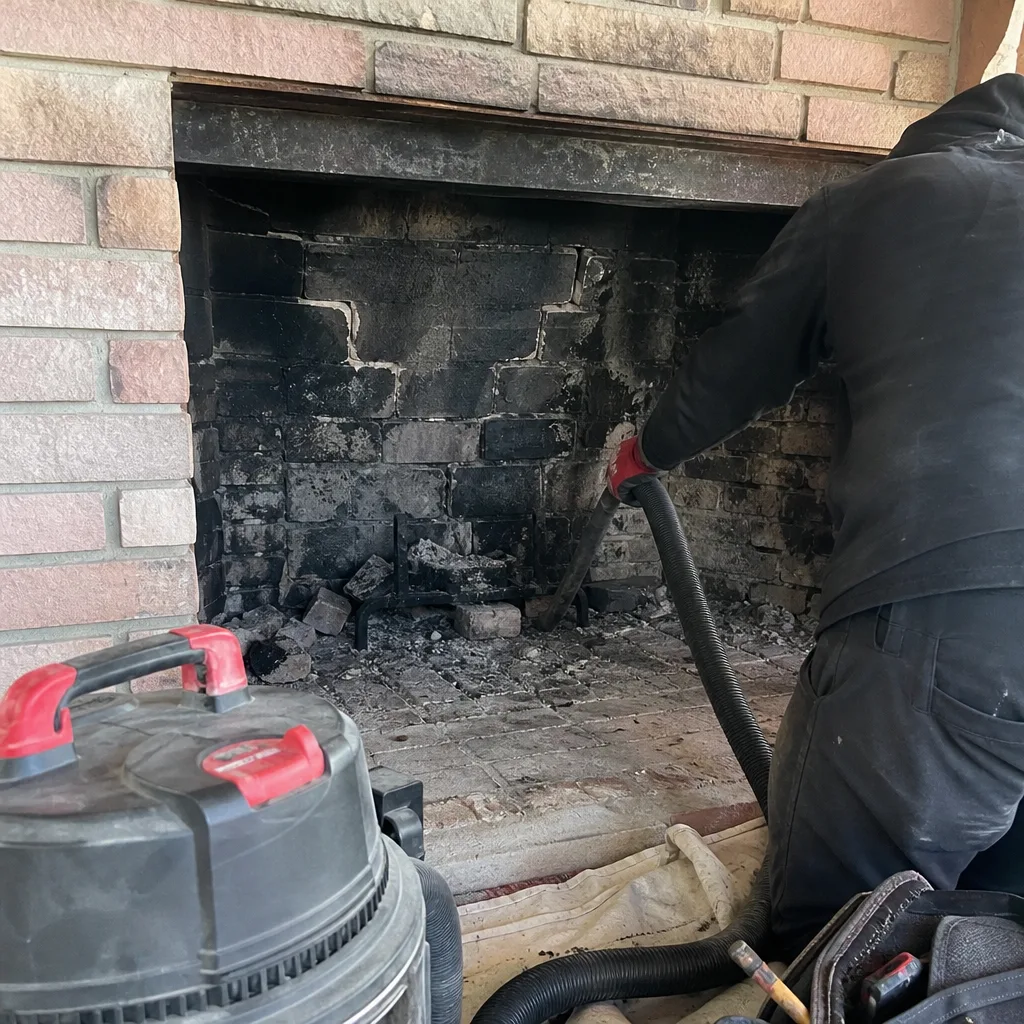 Before
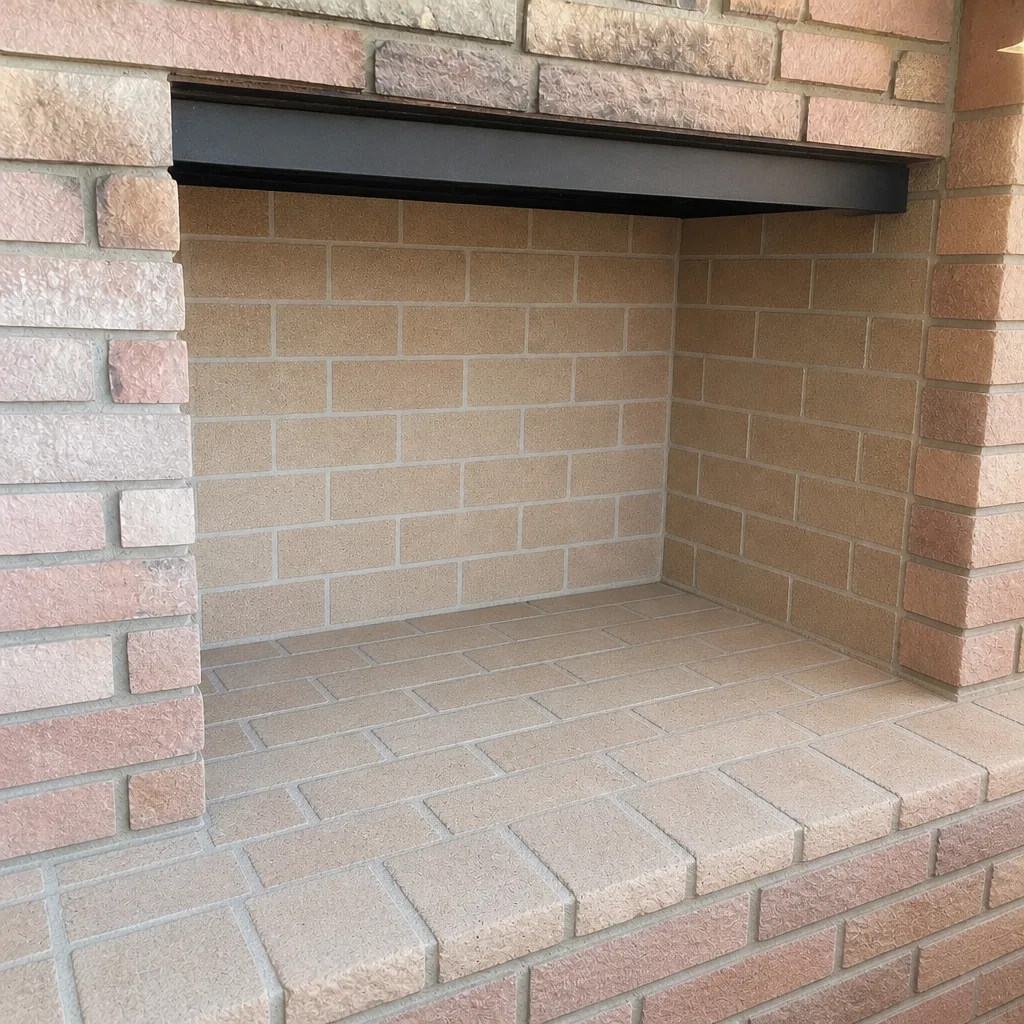 After
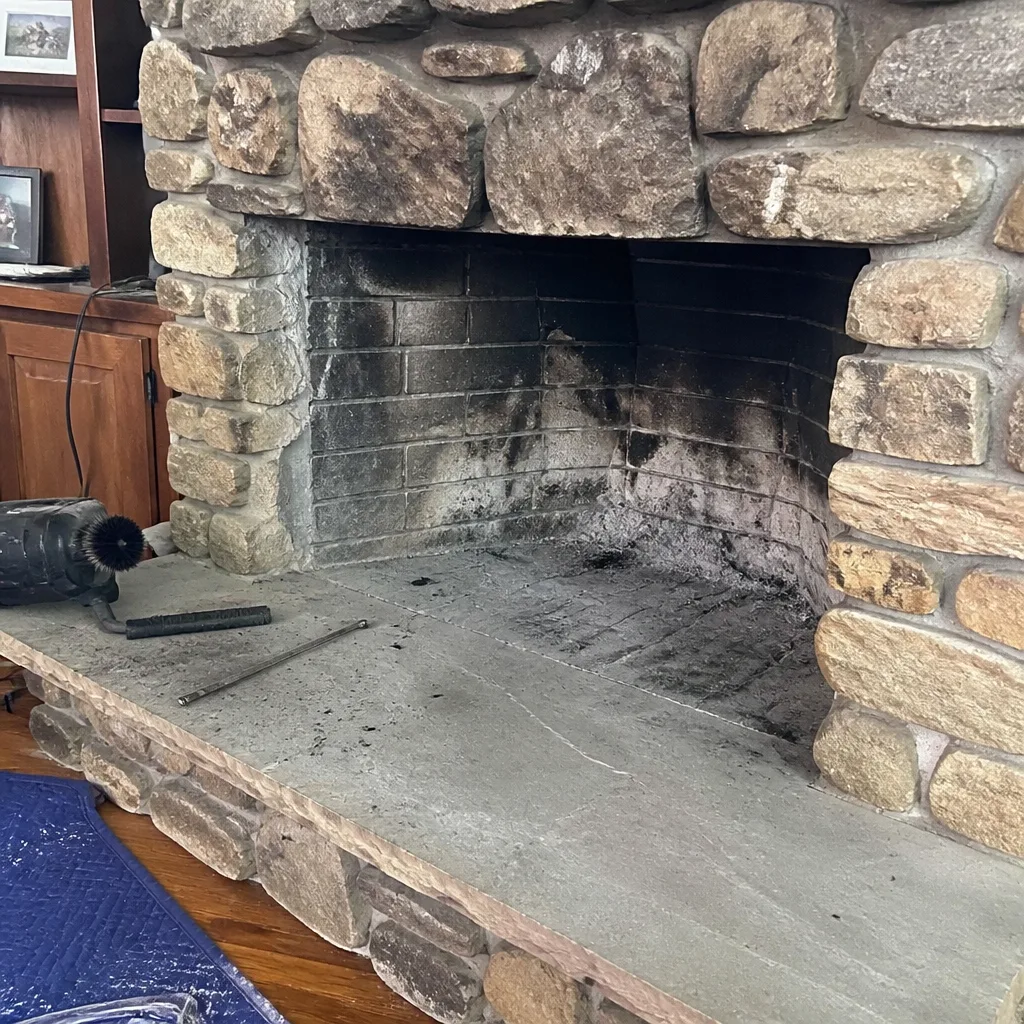 Before
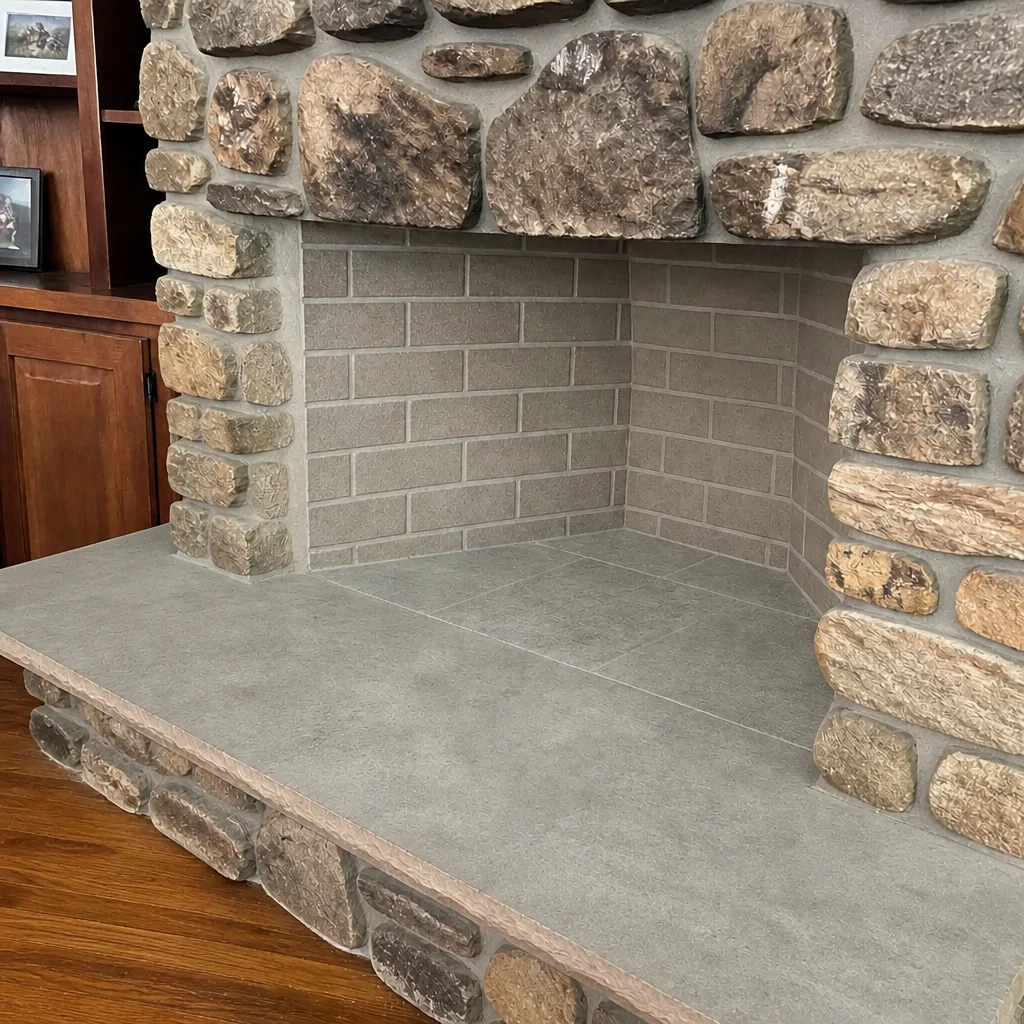 After
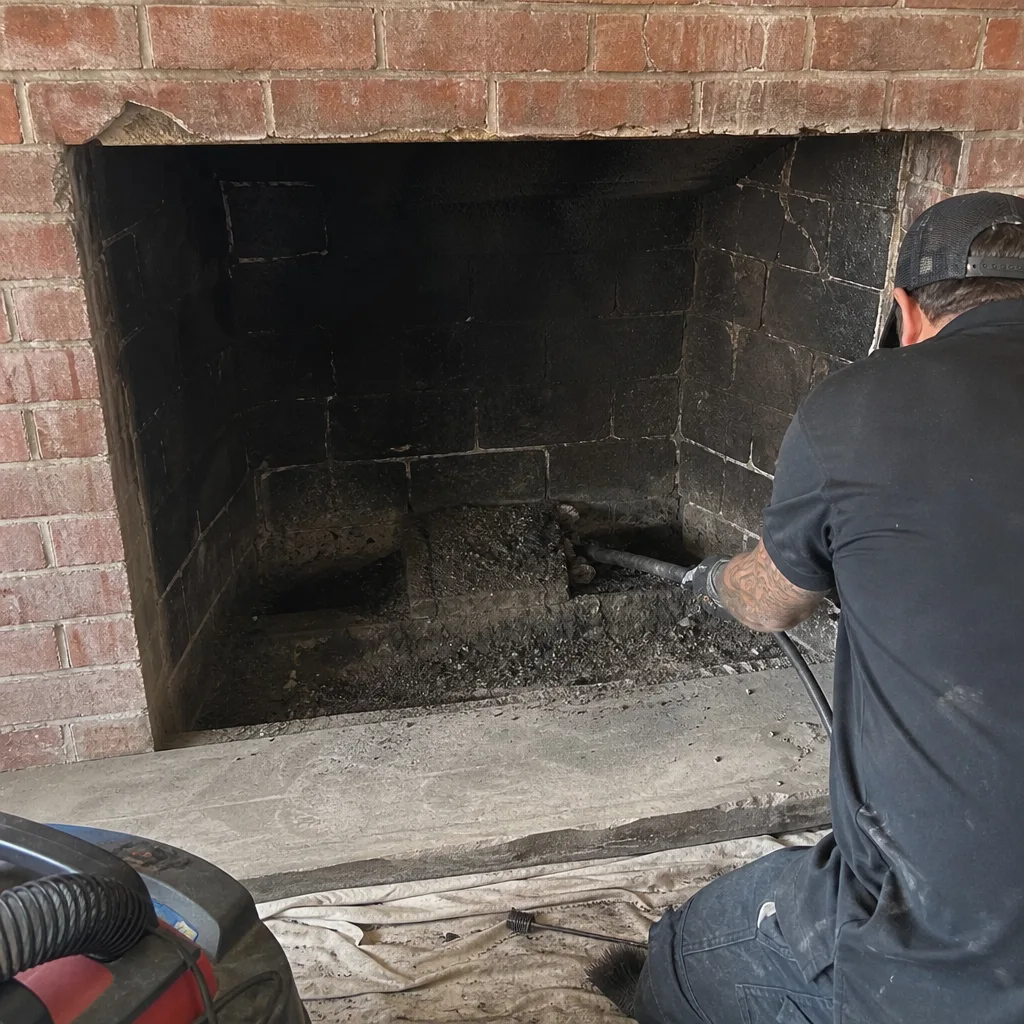 Before
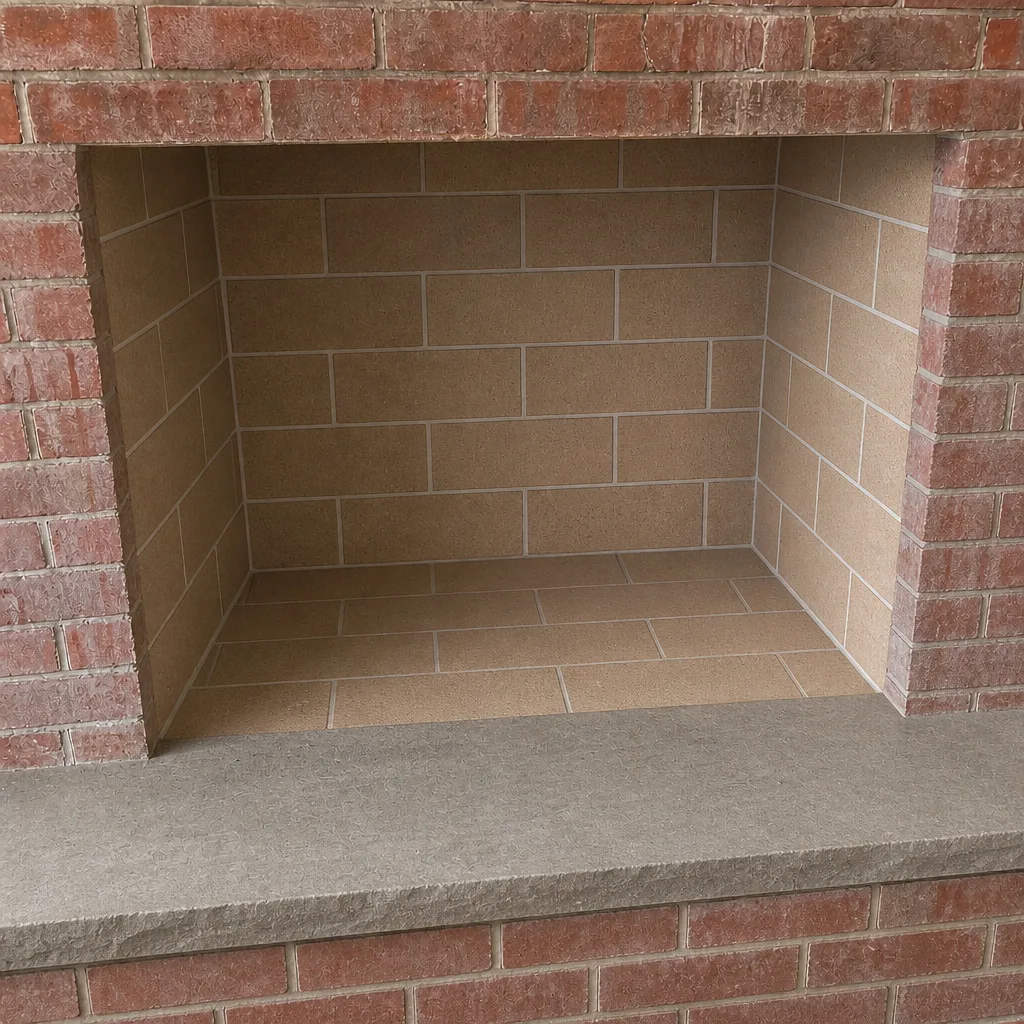 After
When to Call a Professional
Call when you’re planning to burn for the season and haven’t had the chimney swept. Call when a home inspector flagged something on the chimney and you want an honest second opinion. Call when you’re preparing to buy or sell a home in Lehi and want documentation on the chimney’s condition. Call when you’ve noticed staining on the exterior masonry, rust on the firebox, or a cracked crown. Call when the fire isn’t drawing well, or when you’ve seen what looks like glazed creosote on the flue walls. Lehi Chimney Sweep offers free estimates in Lehi. Our technicians have up to 12 years of experience and work with professional-grade products from DuraFlex, HeatShield, Gelco, Olympia Chimney, Famco, and Copperfield. Call (877) 820-9718. We answer 24/7. Fast dispatch from 7am to 7pm, Sunday through Friday.
Frequently Asked Questions
Consumer-grade creosote removers are typically catalytic powders designed to make light stage 1 deposits brittle enough to brush away. They don’t work on hardened stage 2 or stage 3 creosote. Professional-grade products include mechanical methods, chemical softening agents used before brushing, and restoration systems like HeatShield that go beyond cleaning entirely. Call (877) 820-9718 for an exact quote. Estimates are free.
No. HeatShield requires sufficient remaining structural integrity, a flue clean and sound enough to accept the material, and a cross-sectional area compatible with the appliance. Severe spalling, irregular flues, and chimneys that are too far gone disqualify a HeatShield install. In those cases, DuraFlex relining is often the right alternative, and a competent contractor will explain which applies and why.
Most wood-burning chimneys benefit from an annual sweep, particularly through Lehi’s burn season. Gas fireplaces are inspected annually and cleaned as conditions warrant. Homes that burn a lot of wood, or that burn wood that hasn’t been well seasoned, tend to need attention sooner. If you can’t remember the last sweep, that’s a good enough reason to book one.
Galvanized caps corrode relatively quickly in Utah’s freeze-thaw winters, and once the screen rusts through the cap becomes a liability instead of a protection. Stainless steel caps from brands like Olympia Chimney and Copperfield are built to stay in place for years. When a cap is undersized, poorly screened, or installed crookedly, it can restrict draft or invite ice damage. Brand and installation both matter.
A standalone inspection is your chimney evaluated on its own terms, without the cleaning attached. That matters in real estate transactions and in second-opinion situations after a home inspection flag. Many homeowners in Lehi benefit from having the inspection report before any work is recommended, so the recommendation reflects the chimney’s true condition. Ask for it as a separate service.
Creosote builds up faster than most people realize, especially with regular wood burning. The risk isn’t only that the chimney gets dirtier; hardened deposits raise the potential for a chimney fire, and a failing cap or crown lets water into the masonry, which is where real structural damage develops. If you’re not sure of the condition, book an inspection. Call (877) 820-9718 for an exact quote. Estimates are free.
The Bottom Line
Chimney cleaning products aren’t interchangeable, and neither are chimney contractors. Consumer creosote powders have a narrow purpose. Professional-grade materials, including HeatShield for restoration, DuraFlex for relining, and Olympia Chimney, Copperfield, Gelco, and Famco for caps and crowns, are matched to the job and expected to last. In Lehi, where freeze-thaw cycles test every chimney crown and cap, that distinction matters more than it does in milder climates. Ask about brands. Ask about disqualifiers. Ask for a standalone inspection. The answers you get will tell you who you’re hiring. From the firebox to the crown, the right product for the job is what determines whether a chimney is built to last or patched to pass.
Lehi Chimney Sweep provides chimney sweep services across Lehi and works with professional-grade product lines throughout. Call (877) 820-9718 for a free estimate. We answer 24/7. Fast dispatch from 7am to 7pm, Sunday through Friday.
Written by the team at Lehi Chimney Sweep.