
Last updated November 24, 2026
 Sweep & inspection
 Caps & crowns
 Flue relining
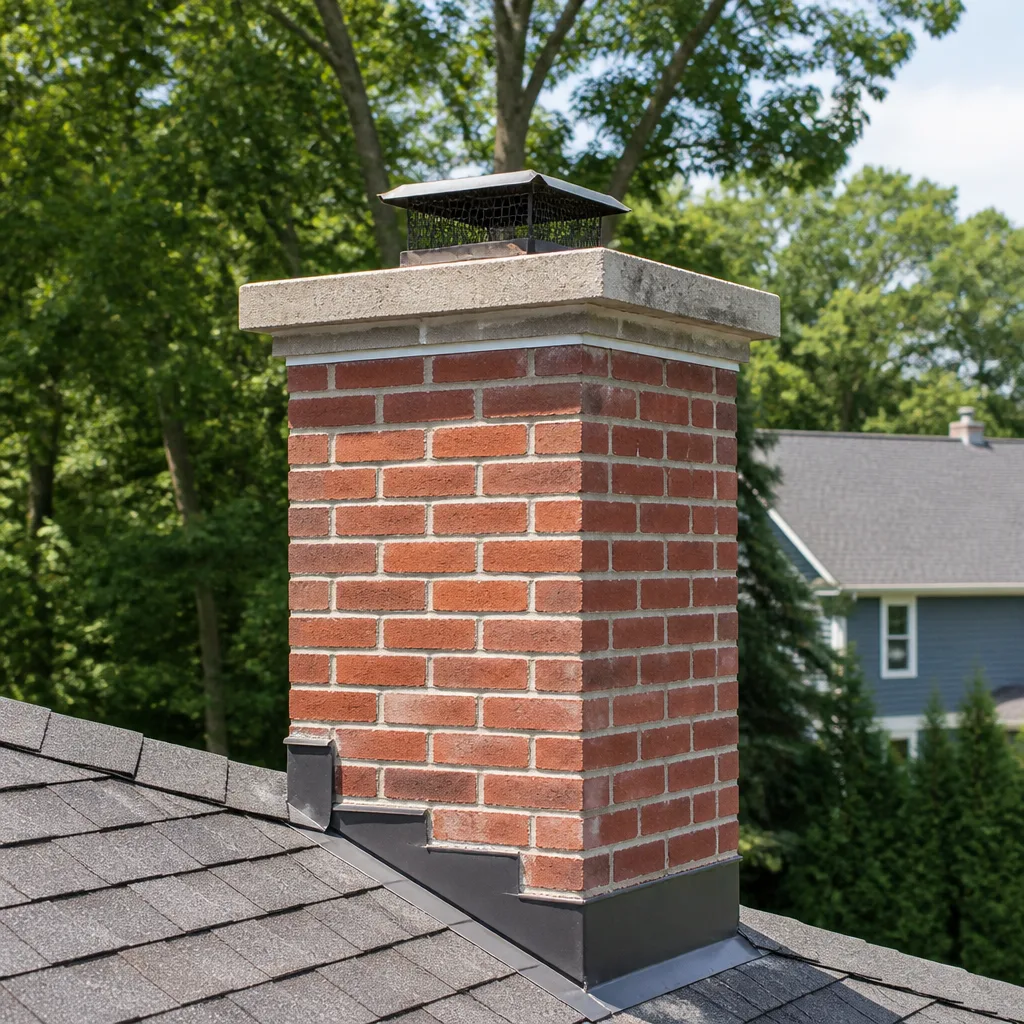 Masonry repair
 Gas fireplace service
Level 1 sweep and inspection to the NFPA 211 annual standard - flue, crown, cap, and flashing checked and photographed
Chimney sweep logs do not sweep chimneys. They loosen some creosote - which then falls where a brush and vacuum still have to collect it.
Chimney Cleaning Warning Signs: A Lehi Homeowner’s Reference Guide
Most chimney problems announce themselves long before they turn into structural emergencies, and the announcements happen inside your home, not on the roof. Homeowners tend to assume the only way to know the condition of a chimney is to hire someone to climb up and look. In our experience, the firebox, the way smoke behaves during a fire, and the masonry you can see from the driveway tell most of the story. This guide teaches you to read those signs the way a sweep does on a site visit, so you can tell the difference between cosmetic wear and something that needs attention now. We’ve written it for Lehi homeowners specifically, because the local housing stock and climate shape what goes wrong here.
Quick Answer
The main chimney cleaning warning signs are: a strong smoke or creosote smell in a room even with the damper open, smoke that rolls back into the room, glossy black creosote inside the firebox, white staining or spalling brick on the exterior, and watermarks on ceilings near the chimney chase. Any one of these is a reason to book an inspection. Several together, or any sign of smoke backdraft, means stop using the fireplace until a professional looks at it.
Styles & brands we work with
- Sweep & inspection
- Caps & crowns
- Flue relining
- Masonry repair
- Gas fireplace service
Table of Contents
- Why Smoke Behavior Is Your First Warning Sign
- The Three Creosote Stages and What Each Looks Like Inside Your Firebox
- Interior Signs Away From the Fireplace
- Exterior Signs: Staining, Spalling, and Efflorescence
- Cosmetic Wear vs. Structural Warning Signs
- How the Lehi Climate and Local Housing Shape Chimney Problems
- What a Sweep Actually Checks During a Visit
- How to Read an Inspection Report and Communicate With a Contractor
Why Smoke Behavior Is Your First Warning Sign
A strong smoke smell in a room with the damper fully open isn’t a draft problem you should shrug off. It usually means the flue is blocked, restricted, or deteriorating, and combustion gases are finding their way back into the living space instead of up and out. That’s a carbon monoxide event waiting to happen, and it deserves a professional inspection before the fireplace is used again.
Smoke behavior during a fire gives you a lot of information. Watch it on a calm evening with the fireplace burning and note what you see:
- Smoke that spills into the room when you first light the fire, then clears. Often a cold-flue problem. Common and usually manageable, but worth confirming the flue isn’t partially blocked.
- Smoke that rolls back continuously regardless of the damper position. This points to a blockage, a damaged liner section, or negative pressure in the house pulling air down the chimney.
- Smoke that hesitates and backs up only on windy days. Frequently a flue height or cap issue. A cap that’s damaged, oversized, or the wrong style for the flue can cause exactly this.
- A fire that struggles to draw at all, with smoke pooling at the top of the firebox. Usually a sign the flue is significantly obstructed, from creosote buildup or a nest or debris.
Negative pressure deserves its own mention. Modern Lehi homes are built tight, and a powerful kitchen exhaust fan or an upstairs bath fan can pull more air out of the house than the chimney can replace. If a fire draws fine on some days and poorly on others, note when it happens. That pattern is diagnostic, and it’s the kind of detail a sweep wants to hear. If you’re seeing smoke back up consistently, book a chimney sweep before your next fire. The visit is short, and it removes the guesswork.
The Three Creosote Stages and What Each Looks Like Inside Your Firebox
Creosote is the residue left behind when wood smoke cools on the flue walls, and it comes in three recognizable stages. Knowing which stage you’re looking at tells you whether a standard brush cleaning will do the job or whether the job is bigger.
- Stage 1: Sooty, flaky, dusty. Looks like black powder or thin flakes. A standard brush removes it cleanly. This is what regular annual cleaning keeps you at, and it’s the stage you want to stay in.
- Stage 2: Crusty and hard, but still breakable. Looks like a rough, brittle layer clinging to the firebox walls and the flue above. You can sometimes chip it with a putty knife. It doesn’t come off with a light brush pass, and it takes more time and more attention to clear properly.
- Stage 3: Glazed and shiny, like black glass or tar. This is the dangerous stage. It’s dense, fuel-rich, and burns hot when it ignites. A standard brush doesn’t touch it. Removing it calls for dedicated tools or a chemical treatment, and sometimes a liner assessment afterward.
You can get a rough idea of what’s happening by shining a flashlight up the firebox and looking at the walls just above the damper. If the surface is black and dusty, you’re in stage 1 territory. If it’s bumpy and crusty, you’re likely in stage 2. If it’s smooth and reflective, treat it as stage 3 and stop burning until someone inspects it. Glazed creosote is the fuel behind most chimney fires, and it builds up fastest when wood is burned green or the fire is kept smoldering and cool. In Lehi, where winters bring steady burning and a lot of homeowners buy wood in bulk, it’s worth learning to read the firebox yourself so you know when to call.
Interior Signs Away From the Fireplace
The chimney chase runs through the house, so some of the clearest warning signs show up well away from the firebox. Homeowners who know to check these spots catch problems much earlier.
- Watermarks on ceilings near the chimney chase. A ring or a brownish stain on the ceiling below or beside the chimney is water finding its way in. It points to a failed cap, a cracked crown, or flashing that’s separated where the chimney meets the roof.
- A musty smell in an unused fireplace. A fireplace that sits closed up for months and smells damp, earthy, or moldy has moisture inside the flue. The cause is usually a missing or damaged cap letting rain and snow straight down the flue.
- Rust or corrosion on the damper or firebox grate. Metal inside the firebox rusts from the top down when moisture reaches it. Rust on a damper that hasn’t seen a fire in months is a strong clue that water is coming in from above.
- Loose or crumbling mortar inside the firebox. Visible as sand or grit collecting on the firebox floor. That grit has to come from somewhere, and it’s usually the firebox itself.
- Efflorescence on interior surfaces. A white, powdery bloom on brick or block near the chimney chase. It’s moisture migrating through the masonry and leaving behind mineral salts.
- Freshly darkened drywall or a soft spot near the chimney. This is a later-stage sign that moisture has soaked through. At that point you need a professional to identify the source before the damage spreads.
Walk through your upper floor and the room under the chimney once a season and look up. In our experience, most failing crowns and separating flashing show a faint interior stain well before they cause a real leak, and the fix at that point is simple. If a leak is already showing up on the drywall, don’t put it off waiting for the spring thaw. Bring in a professional to check the cap and crown, and consider chimney repair before the next cold snap.
Exterior Signs: Staining, Spalling, and Efflorescence
Walk around your house once and look at the chimney the way you’d look at a crack in a foundation. The exterior surface tells you a lot about the state of the crown, the flashing, and the masonry itself, and it costs nothing to check.
- White, powdery staining (efflorescence). A chalky white bloom on the brick. It means moisture is moving through the masonry and leaving mineral salts on the surface as it evaporates. It’s not a leak yet, but it’s the masonry telling you water is getting in somewhere.
- Dark staining below the crown. Brown or black vertical streaks on the top courses of brick. Usually means water is running down the outside of the flue from a crown that no longer sheds it.
- Spalling brick. Brick faces that have popped off, leaving the softer inner core exposed. This is a structural warning, not a cosmetic one. Spalling brick indicates freeze-thaw damage, and water has been getting behind the face.
- Crumbling or missing mortar joints. Ragged, sandy joints up the chimney face. Water and frost have been working on the mortar, and once it’s gone the brick is exposed to the next winter.
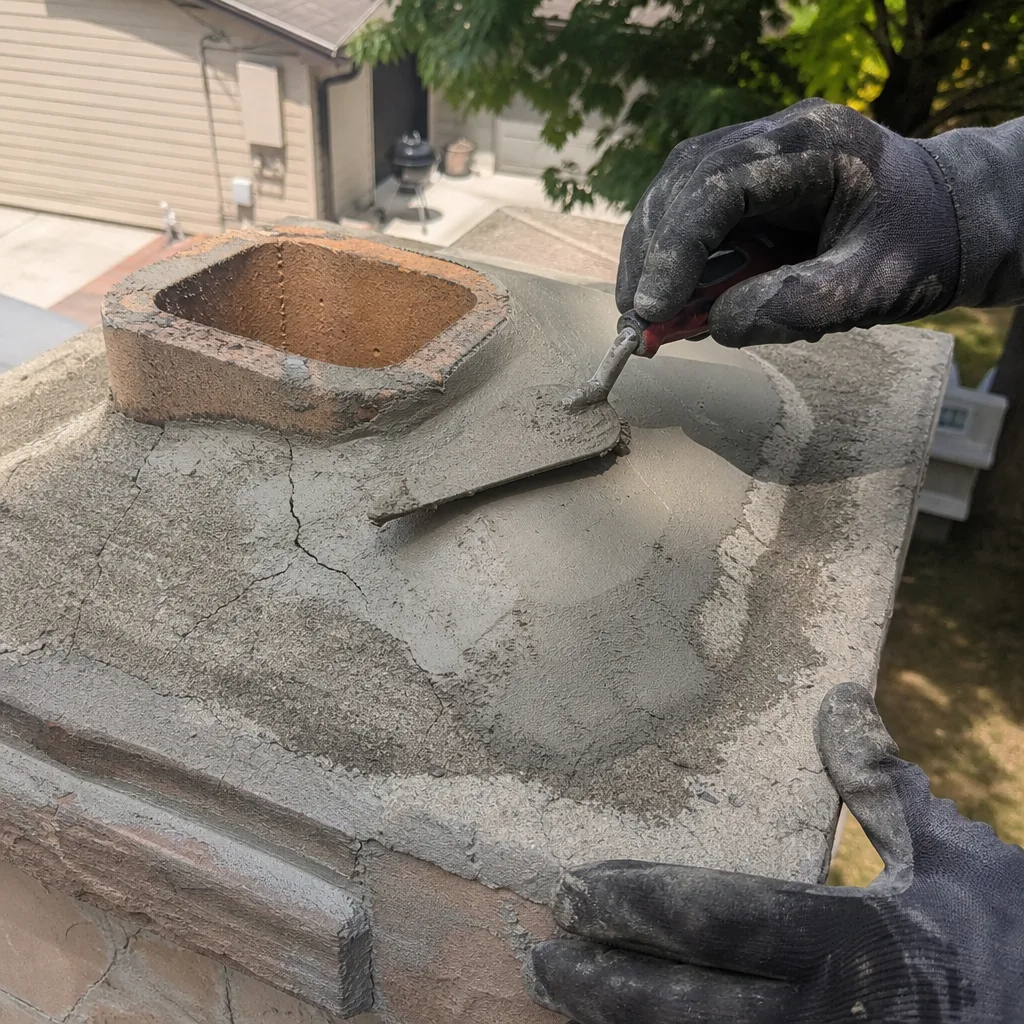
- A visible crack in the crown. The concrete slab at the very top of the chimney. A crack in the crown lets water run straight into the flue structure. It’s a very common cause of interior leaks.
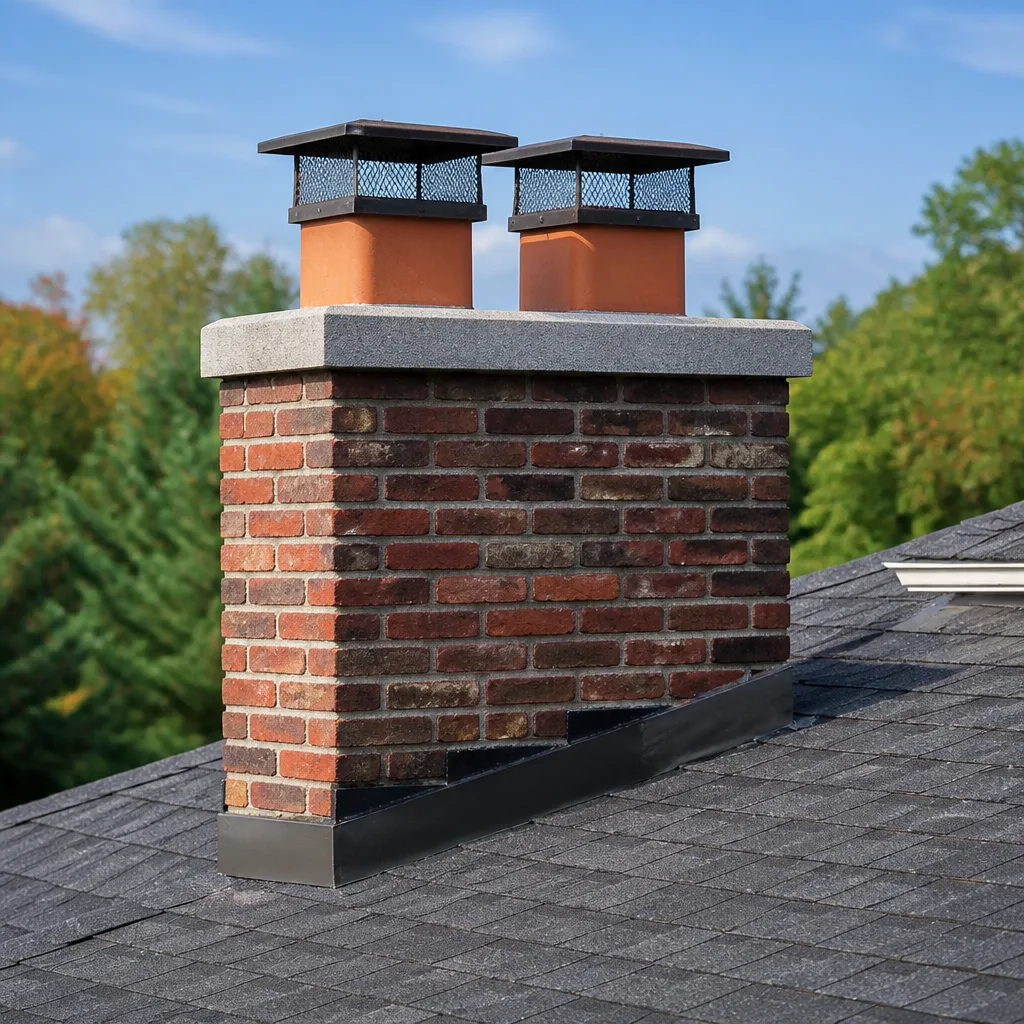
- Flashing that’s pulling away at the roofline. The metal where the chimney meets the roof. If it’s lifted, rusted, or sealed with visible caulk, it’s a leak waiting to happen.
In our experience the exterior tells us most of what we need to know about the crown and flashing before we’re ever on the roof. The crown is the chimney’s first line of defense against water, and the sections near the top of the chimney take the worst of the freeze-thaw cycle during a Lehi winter. If your crown is cracked, replacing or rebuilding it with a proper Gelco or Famco crown is a durable fix rather than a smear of sealant. Look at your chimney from the street after a hard rain. Any new dark streaks below the crown are worth investigating.
Cosmetic Wear vs. Structural Warning Signs
Most homeowners either ignore a real warning sign or panic over a cosmetic one. Learning the difference will save you money and, more importantly, protect you from being sold work you don’t need. Here’s how we tell them apart.
- Cosmetic: thin soot streaks on the exterior brick, a slight dusting of soot at the firebox opening, minor surface staining on the hearth, small chips in exterior mortar that haven’t gone deep, and a crown with hairline surface checking that doesn’t open up under a fingernail. These are maintenance items. They’re worth watching but they don’t stop you using the fireplace.
- Structural: spalled brick where the face has separated, mortar joints that are recessed more than a little or crumbling, a crown with a real crack you can slip a credit card into, a visible crack in the firebox or flue, a damper that won’t close or open smoothly, and anything that lets water in. These need a professional pair of eyes.
The important thing is to communicate accurately. When you call, describe what you see and where. “There’s a white powdery stain on the chimney from the roofline up” gives a sweep useful information. “The chimney looks bad” doesn’t. Note the location, the size (roughly), whether it’s new, and whether it changes after rain or after a fire. That level of detail is how a professional triages the call over the phone and tells you whether you need a cleaning, a full inspection, or a repair visit.
Being clear also protects you. A good contractor will describe a repair in terms of what’s failing and why, not just a dollar figure. If someone tells you that you need a new liner based on a quick glance from the driveway, ask what they saw and whether they can show you a camera picture. That’s a fair question, and it’s the one worth asking before you commit to anything.
How the Lehi Climate and Local Housing Shape Chimney Problems
Chimneys in Lehi deal with two things that drive most of the damage we see: a long, hard freeze-thaw cycle in winter and a dry, windy spring that tests every cap and crown on every house. Brick and mortar absorb water during wet periods, then expansion and contraction during a Lehi winter frost works on whatever’s in the joints. A small crack in the crown becomes a bigger one over a single season. Mortar that looks fine in the fall can start spalling by the following spring.
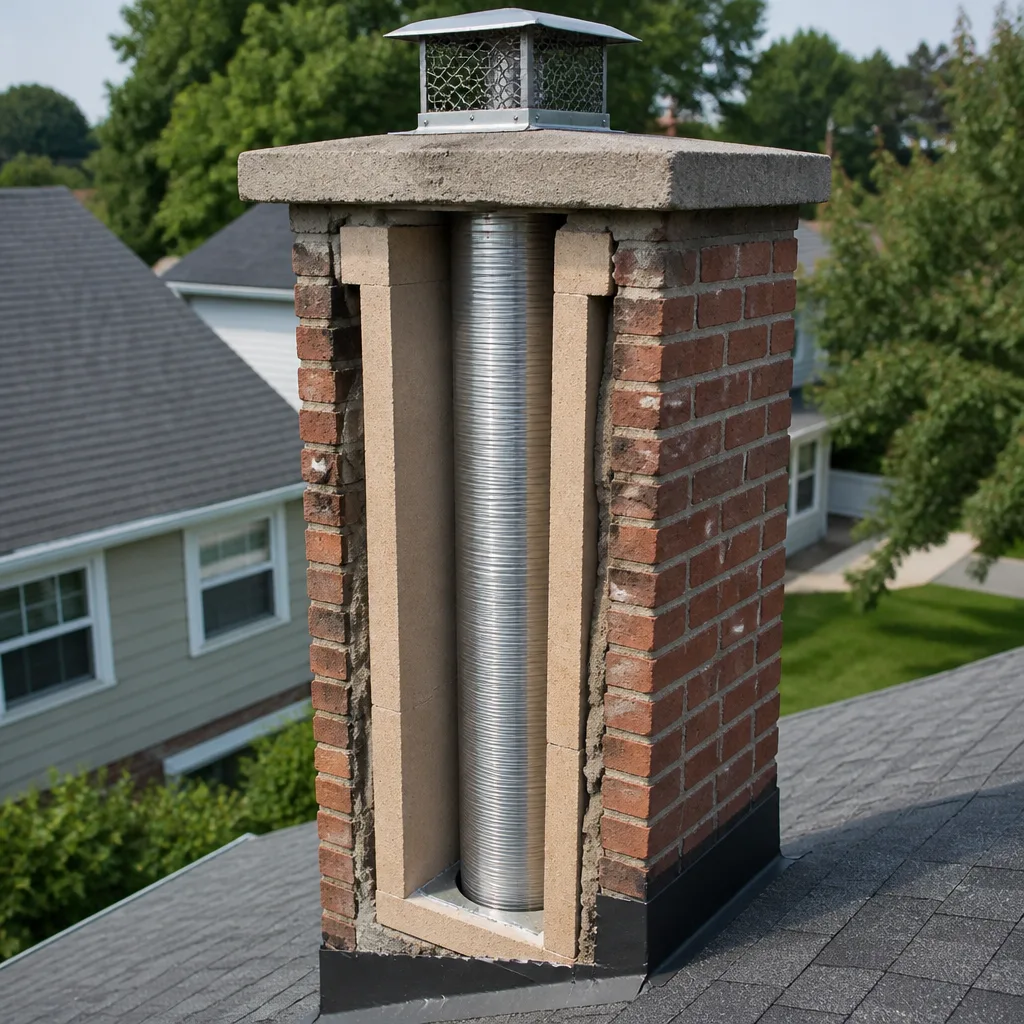
The local housing stock matters too. Lehi spans everything from newer subdivisions going up on the city’s east side to older homes closer to the center. Older chimneys tend to be masonry with clay tile liners that have seen decades of heating and cooling, and the liner cores can crack or spall with age. Newer homes often have factory-built or prefabricated chimneys that need their own specific parts, and a generic cap or crown from the hardware store won’t always fit properly. That’s why we use professional-grade components: DuraFlex flexible liners, Olympia Chimney components, Gelco caps and crowns, and HeatShield for firebox and liner restoration. Getting the right product for the specific chimney is half the job.
Lehi’s dry summers are a quiet advantage. It’s the season to deal with a damaged crown or a failing cap before the first snow, and the repair access is easier when the roof is clear. If you’re a Lehi homeowner planning for winter, the fall is the right time to catch what the last freeze cycle did. Waiting until the first fire of the season to notice a problem just makes it a rush job.
What a Sweep Actually Checks During a Visit
A proper cleaning visit is also an inspection, even if you didn’t book it as one. Here’s what we run through, in order, on a typical Lehi visit:
- Firebox and firebox floor. Looking for cracks, loose mortar, and any grit that’s fallen from above.
- Damper and smoke shelf. Confirming the damper opens fully and seats when closed. Checking for debris piling up on the smoke shelf.
- Flue and liner. Running a camera up the flue to look for cracks, gaps at the joints, offset tiles, and creosote stage. If the liner is failing, we can show you what we see.
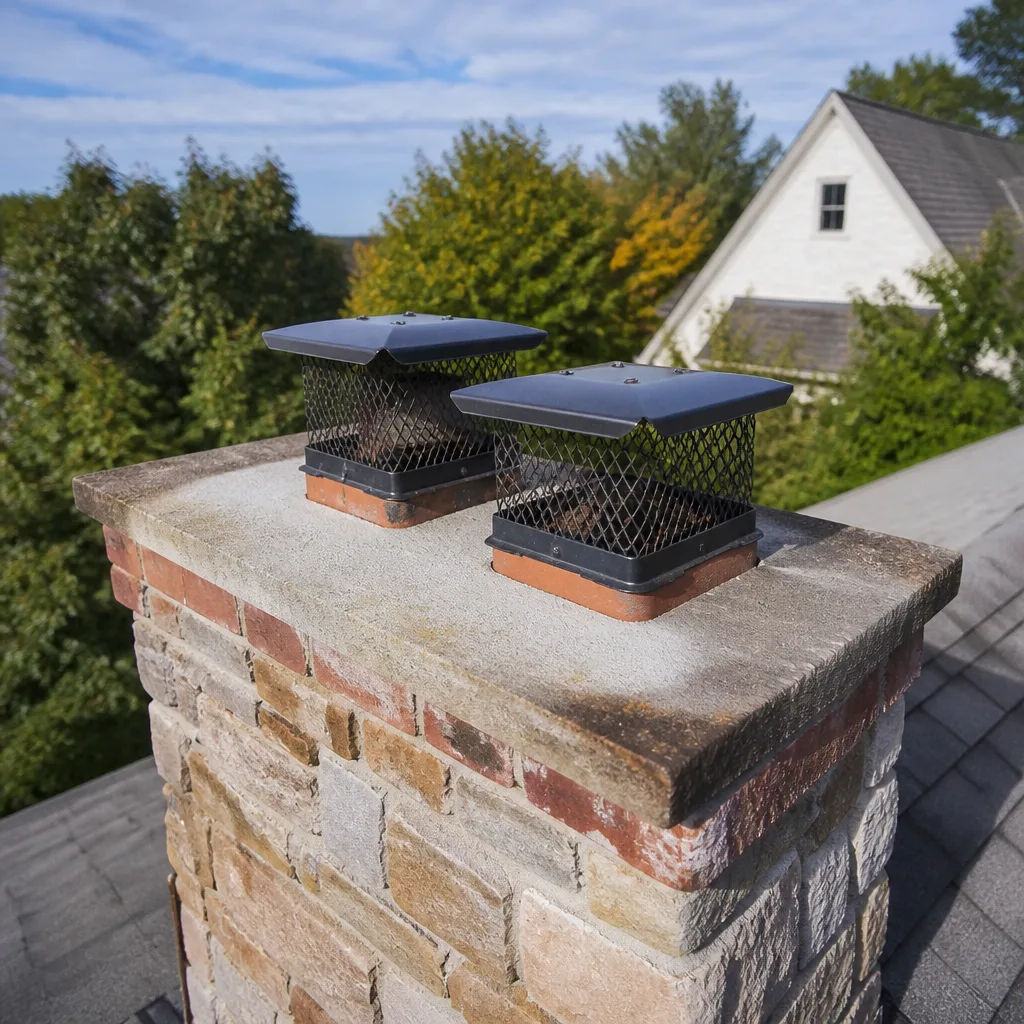
- Chimney cap and crown, from the roof. Checking the seal around the cap, the condition of the crown, and the flashing where the chimney meets the roof.
- Exterior masonry. Confirming any exterior warning signs and whether they’re cosmetic or structural.
- Report and recommendation. We walk you through what we found, in plain language, and separate what needs attention now from what can wait.
If the flue needs more than a cleaning, we can carry a repair through the same visit. HeatShield restores a firebox and flue liner without a full teardown when the damage is within what it’s designed for, and DuraFlex can reline a chimney when the old flue has failed beyond what a patch can fix. That’s a real advantage over coordinating a sweep and a separate repair contractor, and it means the person who found the problem is the one who plans the fix. If you’re not sure whether you have a problem, a standalone inspection is offered as its own service. Sometimes the answer is “nothing needs doing,” and we’ll tell you so.
How to Read an Inspection Report and Communicate With a Contractor
A chimney inspection report should leave you understanding exactly what condition your chimney is in and what, if anything, needs doing. If you don’t walk away with that clarity, ask for it. Here’s what a useful report covers:
- Condition by component. Firebox, damper, smoke shelf, flue, cap, crown, and flashing, each with a clear description. Not just “chimney in fair condition.”
- Creosote stage. Stated plainly, so you know what kind of cleaning the flue needs.
- Photographs. A camera picture of the flue and any damaged section. If a professional recommends a repair, seeing the actual damage is fair to ask for.
- Recommended actions, separated by timing. What should be handled now, and what can safely wait until a convenient time.
- The reason behind any repair. “The crown is cracked and water is entering the flue” is a reason. “Your chimney needs a rebuild” is not, on its own.
The right question to ask a contractor is simple: can you show me what you saw? Anyone recommending thousands of dollars of liner or masonry work should be able to show you the camera footage or a photo of the damage and explain what the failure mode is. Ask whether the repair is urgent or whether it can wait a season. An honest contractor will tell you when something can wait, and when it can’t. The same applies if you’re preparing a Lehi home for sale or following up on a home inspection flag. An independent inspection report gives you something concrete to hand to a buyer or a seller, and it keeps the conversation about condition instead of guesswork.
Common Mistakes to Avoid
- Treating smoke backdraft as a draft problem. If smoke rolls into the room with the damper open, don’t crack a window and call it fixed. It points to a blockage or a failing flue, and the carbon monoxide risk makes it worth a proper inspection.
- Burning green or unseasoned wood to save money. Wet wood burns cool, and cool smoke deposits creosote faster. It’s one of the quickest ways to accelerate creosote from stage 1 to stage 3 inside a flue.
- Judging the chimney only from outside or only from inside. The interior firebox and the exterior crown tell two different parts of the same story. You need to check both, because one can look clean while the other is failing.
- Sealing the exterior with caulk or paint to make it look clean. Sealing the surface of masonry traps moisture, which is the opposite of what the efflorescence was warning you about.
- Assuming a standard brush clean is enough after several seasons of heavy use. Stage 2 and stage 3 creosote need more than a brush pass, and a sweep can only confirm what stage you’re at by looking.
- Skipping the inspection when you buy a Lehi home. A home inspection flags the chimney as a system, not in detail. A standalone inspection gives you a condition report on the actual flue and firebox, which is far more useful before you commit to the purchase.
- Waiting until the first cold snap to book a cleaning. Lehi winters arrive fast. Getting the sweep booked before the seasons turn means you’ll be ready the first time you want a fire, and you’ll catch crown or cap damage before the snow makes access harder.
See the difference
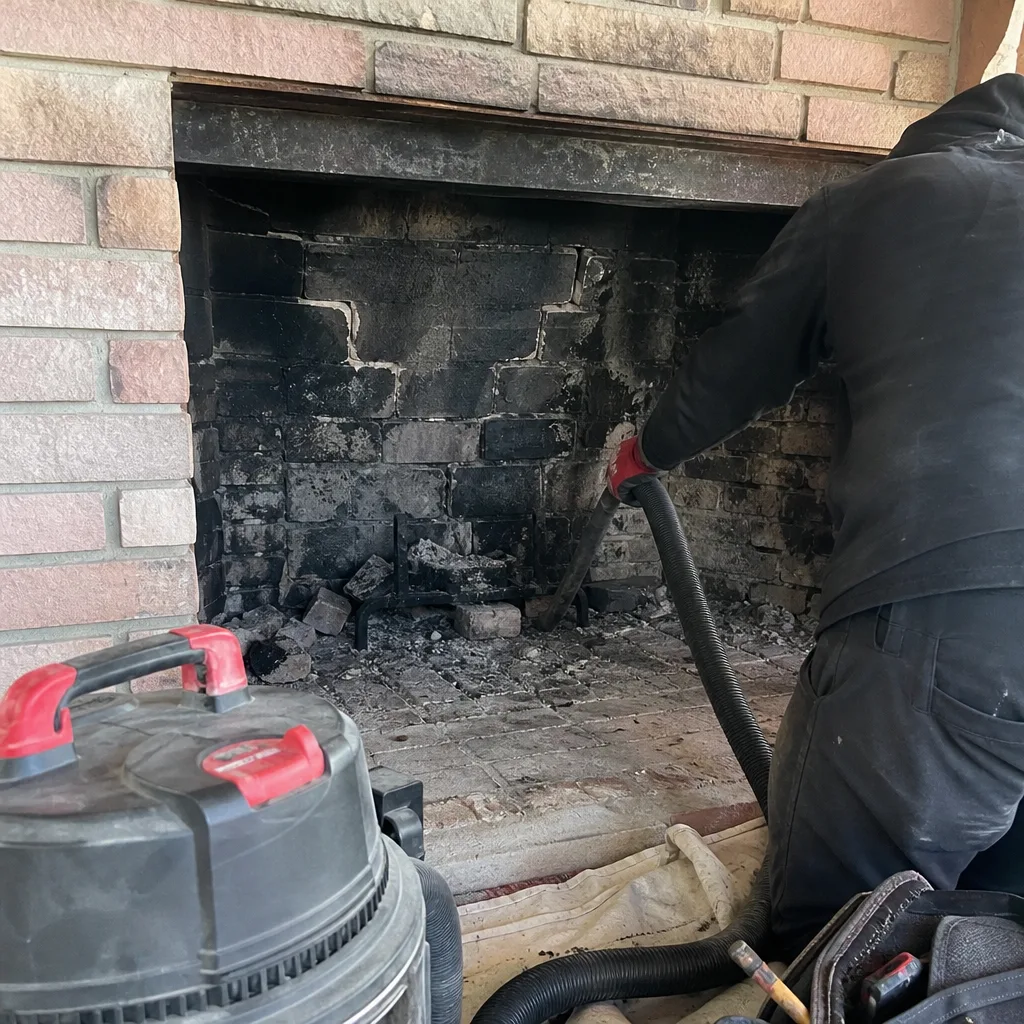 Before
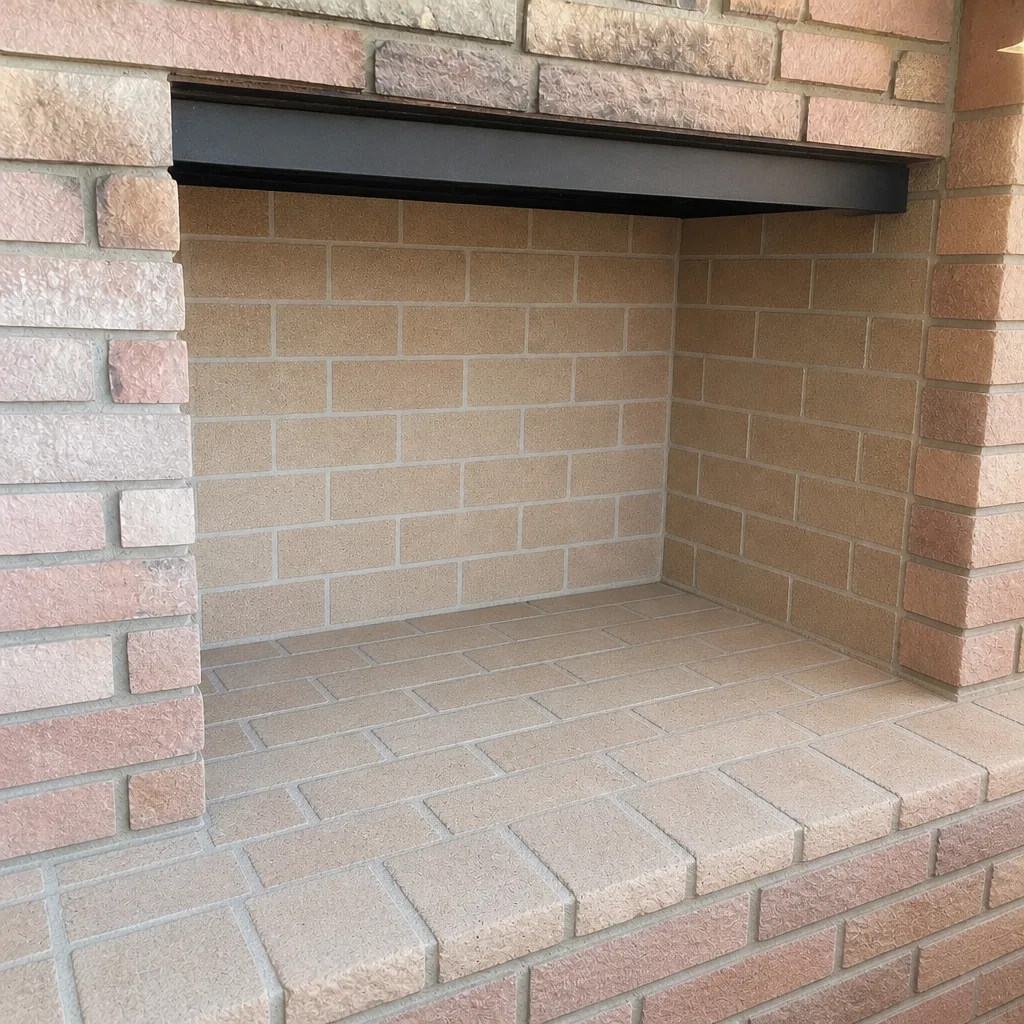 After
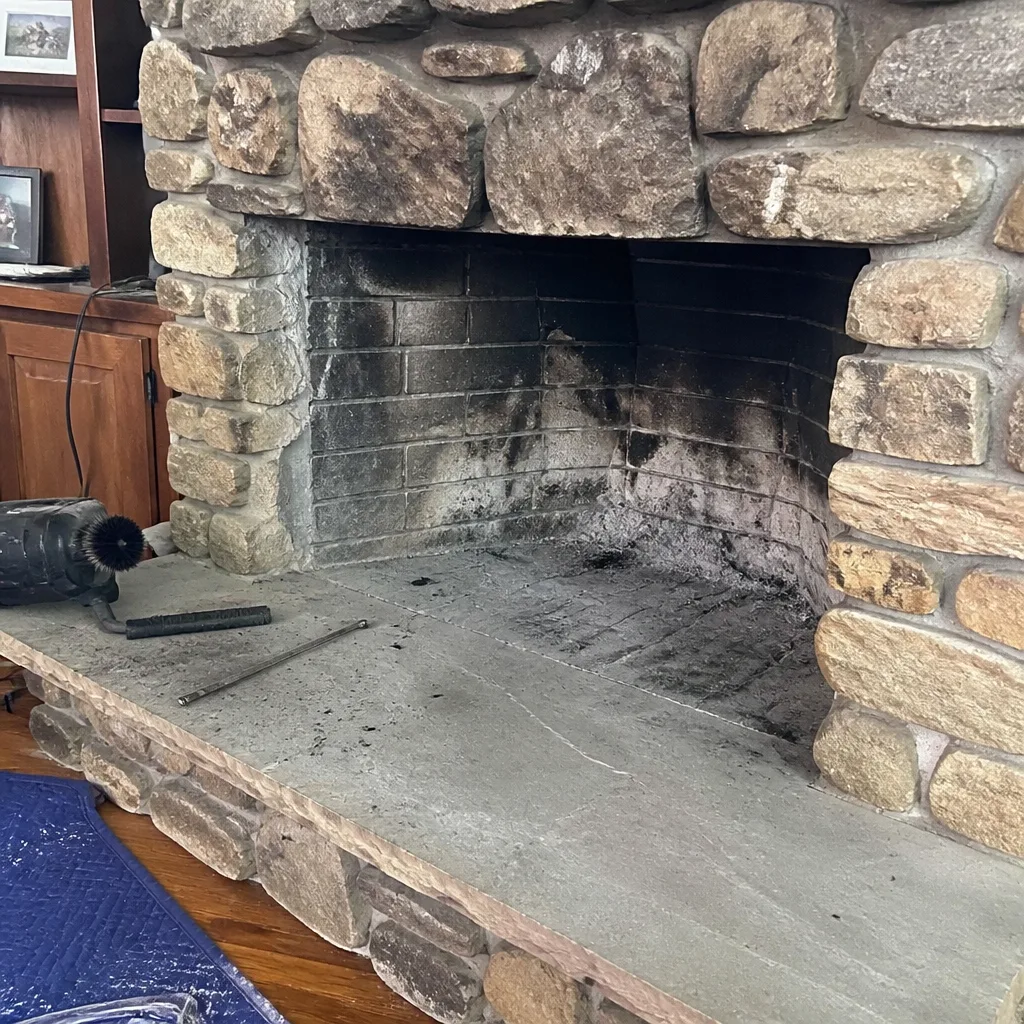 Before
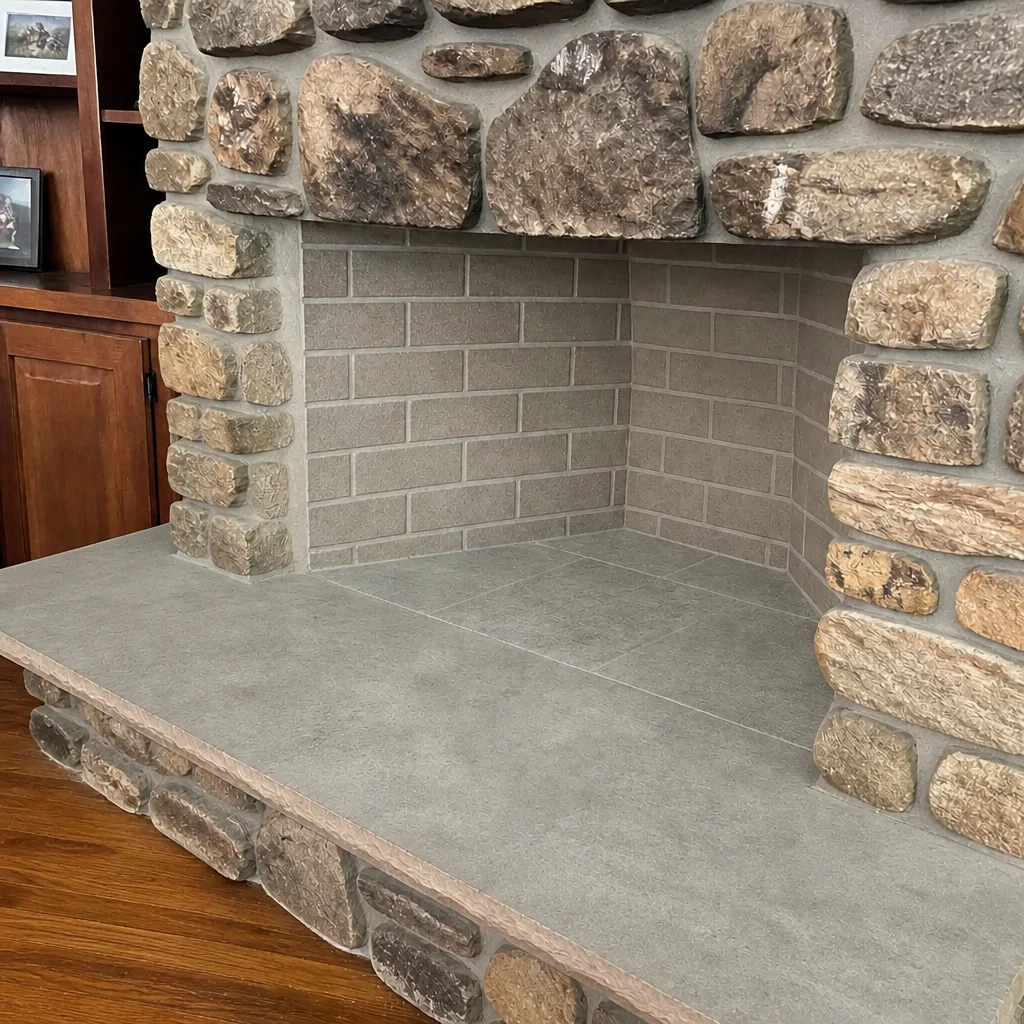 After
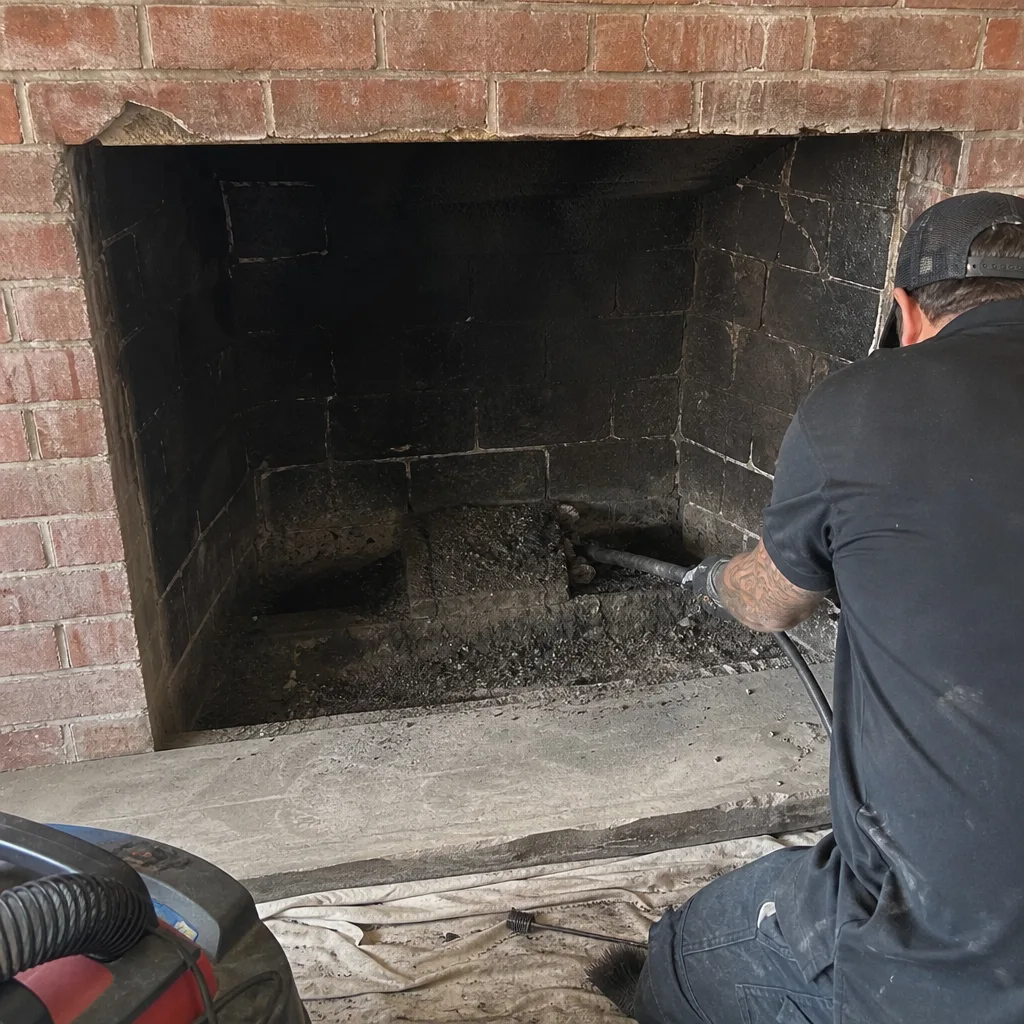 Before
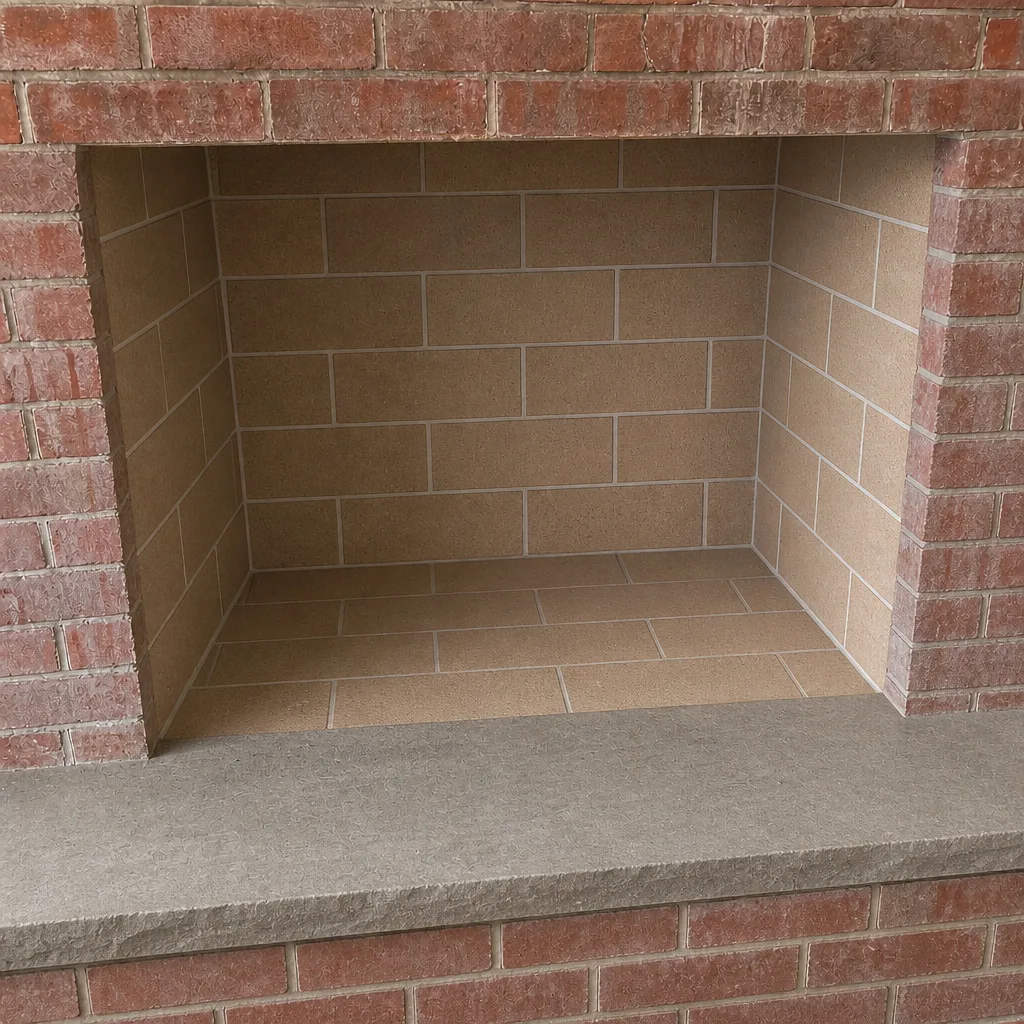 After
When to Call a Professional
Call a professional if you’re seeing smoke back into the room with the damper open, if you smell a strong creosote or smoke odor in a room even when the fireplace is cold, if you’ve got glazed, shiny creosote in the firebox, or if you notice interior water stains near the chimney chase. On the exterior, cracked crowns, spalled brick, crumbling mortar, and staining below the crown all warrant a look. If it’s been more than a year since the last cleaning, or you can’t remember the last time it was inspected, that’s reason enough. We offer free estimates in Lehi. Call (877) 820-9718 to get the visit on the calendar.
Frequently Asked Questions
Once a year for most wood-burning households, and more often if you’re burning frequently or burning unseasoned wood. A good rule of thumb is that a chimney should be swept when a quarter inch of creosote has built up, and the only way to confirm that is to look. Call (877) 820-9718 to book a cleaning and inspection together.
Glazed creosote looks like a shiny, black, tar-like coating on the inside of the flue and firebox walls. It’s dangerous because it’s dense, fuel-rich, and burns very hot when it ignites. A standard brush won’t remove it. That’s a job for a professional who can assess the liner afterward.
We’d advise against it. A chimney is a confined vertical space, and a proper cleaning involves a camera inspection of the flue and a check of the crown and cap from the roof. It’s not a job you can safely or thoroughly do from the firebox alone. Call (877) 820-9718 for a professional visit.
A smoke smell from a cold fireplace usually means a pressure imbalance pulling air down the flue, or a residue of creosote and soot inside the flue itself. It’s a common sign that the chimney is due for a cleaning. Get it checked before you light the next fire. Call (877) 820-9718 for an appointment.
The white stain is efflorescence, and it means moisture is moving through the masonry. It isn’t a leak in itself, but it’s a sign that water is getting in somewhere, usually at the crown or the flashing. It’s worth a visit to identify the source before the next freeze cycle. Call (877) 820-9718 for a free estimate.
Most cleaning visits run from under an hour to a couple of hours depending on creosote stage and access to the roof. A standalone inspection is usually shorter. We’ll give you a realistic window when we book, and the written estimate sets the final price before any work begins.
Then that’s the answer, and we’ll say so. Nothing gets recommended without evidence you can see for yourself, whether that’s a camera picture of the flue or a photograph of a cracked crown. Sometimes the right call is that the chimney is fine, and you can go enjoy the fireplace with confidence. Call (877) 820-9718 if you want a second opinion.
The Bottom Line
Most chimney problems show up inside your home weeks before they become a structural repair, and knowing what to look for gives you a real advantage. Strong smoke smells, backdrafting smoke, glossy glazed creosote, watermarks on the ceiling below the chase, and efflorescence or spalling brick on the exterior are all worth a professional look. Separating cosmetic wear from structural warning signs keeps you from over-spending and from waiting too long on the failures that matter. If any of the signs here match your chimney, book an inspection. We offer free estimates in Lehi, and we’ll tell you honestly when a repair can safely wait.
If you’re in Lehi and something on this list matches what you’re seeing, call (877) 820-9718 for a free estimate. We answer 24/7, with fast dispatch from 7am to 7pm. Prefer to start with a cleaning visit? See our Lehi Chimney Sweep page, and if water is getting in around the firebox or crown, we can handle the fireplace repair as well. From the firebox to the crown, our technicians have up to 12 years of experience with professional-grade materials, and every recommendation comes with a camera picture or photo you can see for yourself.
Written by the team at Lehi Chimney Sweep.